Why Trend Following Works
Markets do not move in straight lines, but they do move in directions — sometimes for weeks or months at a time. Trend following is the discipline of identifying those directional moves early enough, entering with confidence, and staying in the trade long enough to capture a meaningful portion of the move. It is one of the oldest and most consistently profitable approaches in financial markets, used by everyone from systematic hedge funds to individual retail traders.
The core logic is simple: assets that have been moving in one direction tend to keep moving in that direction longer than most traders expect. This is driven by real-world fundamentals — monetary policy divergence, capital flows, risk sentiment cycles — all of which take time to fully price in. Trend followers profit from that lag.
The biggest challenge is not finding trends. It is staying in them. Most traders exit winning trades far too early, spooked by short-term pullbacks that are entirely normal within a healthy trend. Mastering trend following is as much a psychological discipline as it is a technical one.
Identifying a Genuine Trend
Before you can follow a trend, you need to confirm that one actually exists. A common mistake is treating any short-term directional move as a trend and getting caught in sideways, choppy price action.
Market Structure First
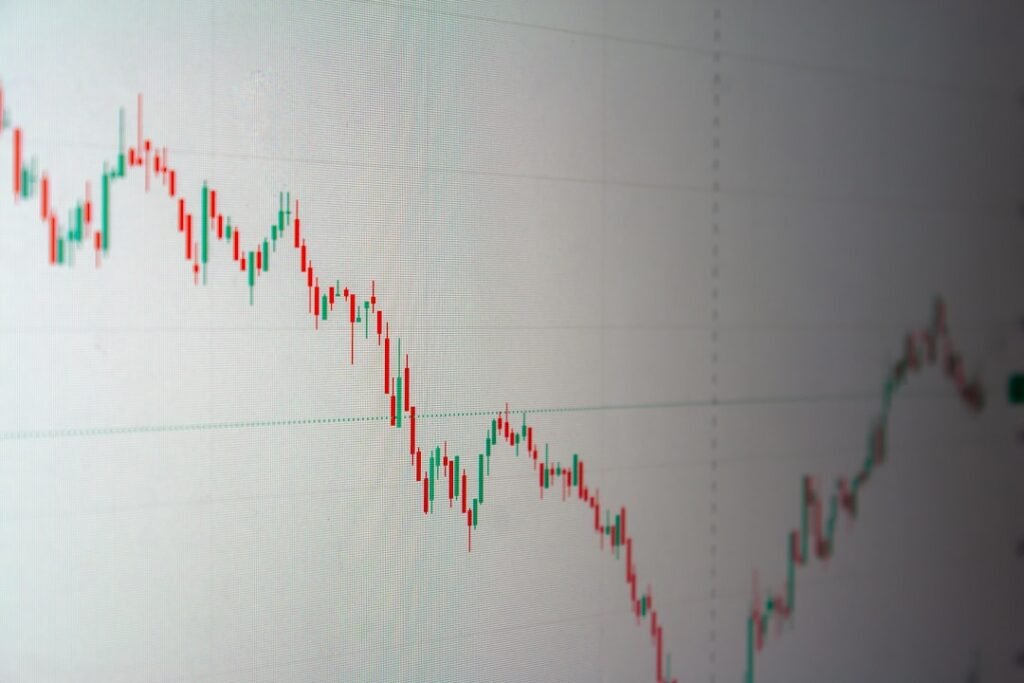
The most reliable way to identify a trend is through market structure: a series of higher highs and higher lows (uptrend) or lower highs and lower lows (downtrend). If price is not consistently making new swing highs or lows in one direction, there is no meaningful trend to follow. Price action trading builds entirely on reading this kind of structure without needing indicators at all.
Moving Averages as a Filter
Moving averages are the workhorses of trend following. The 50-period and 200-period simple moving averages (SMA) on daily charts are widely watched benchmarks. When price is consistently above a rising 200 SMA, conditions broadly favor longs. When price is below a falling 200 SMA, conditions favor shorts. Many traders also look for a “golden cross” (50 SMA crossing above 200 SMA) as a long-term bullish signal and a “death cross” for bearish confirmation.
Exponential moving averages (EMA) — particularly the 20 EMA and 50 EMA — are better suited for shorter timeframes because they respond more quickly to recent price changes. The Kijun-sen line from Ichimoku is another respected dynamic support/resistance tool that doubles as a trend filter.
Momentum Confirmation: ADX
The Average Directional Index (ADX) measures trend strength, not direction. An ADX reading above 25 suggests a trend is strong enough to trade. Below 20, the market is likely ranging and trend-following setups tend to fail repeatedly. Pairing ADX with your moving average analysis gives you a much stronger confirmation before risking capital.
Entering and Managing Trend Trades
Knowing a trend exists is only half the job. Entering at the right moment — and managing the trade correctly — determines whether you actually profit from it.
Entry Techniques
There are two main schools of thought on trend entries:
- Breakout entries: Buy when price breaks above a key resistance level or recent swing high, confirming the trend is extending. This captures momentum but can result in late entries on extended moves.
- Pullback entries: Wait for price to retrace to a moving average (e.g., the 20 EMA or 50 SMA) or a prior support level, then enter in the direction of the trend. This improves your risk-to-reward ratio but requires patience and confidence that the trend will resume.
Candlestick patterns can sharpen your timing significantly at these pullback zones. A bullish engulfing or hammer candle near a rising 50 SMA gives a strong signal that buyers are stepping back in. For a deeper look at these patterns, see our guide on top candlestick patterns every trader should know.
Stop Placement and Trailing Stops
In trend following, initial stops are typically placed below the most recent significant swing low (for longs) or above the most recent swing high (for shorts). This gives the trade room to breathe through normal pullbacks without hitting your stop.
The real art is the trailing stop. As the trend develops, you move your stop up beneath each successive higher low. This locks in profit while keeping you in the trade. A common method is to trail stops below the 20 EMA or below each new swing low on the timeframe you are trading. The goal is to stay in the trade until the trend structure itself breaks — not until you are personally uncomfortable.
Position Sizing
Because trend trades are held for longer periods and therefore face more intraday volatility, appropriate position sizing is critical. Many trend followers risk 1–2% of account equity per trade. This allows them to absorb the inevitable short-term retracements without being stopped out by noise, while still benefiting significantly when the trade runs in their favor.
Common Mistakes Trend Followers Make
- Trading against the trend on higher timeframes: If the daily chart is in a downtrend, taking long signals on the 15-minute chart is fighting a much larger force. Always know the trend on at least one timeframe above your entry timeframe.
- Exiting too early: Taking profit after a small move because it “feels” like a lot, only to watch the market continue without you. Letting winners run is harder in practice than in theory.
- Ignoring ranging conditions: Trend-following tools like moving averages generate false signals constantly in flat, sideways markets. The Stochastic Oscillator can be useful in range-bound conditions, but it is not a trend-following tool — understanding the difference matters.
- Over-trading: Not every day offers a quality trend setup. Patience is a genuine edge. If you find yourself needing faster, shorter-term action, it may be worth reading about scalping strategies as a complementary approach — but understand they require a completely different mindset.
Automating and Systematizing Your Trend Strategy
One of the key advantages of trend following is that its rules are objective enough to be codified into a systematic strategy. If you want to remove emotional bias from your entries, trailing stops, and exits, an Expert Advisor (EA) can execute your rules with perfect consistency. MGH Products offers MetaTrader indicators and EAs at mghfx.com that can support trend-following approaches — worth exploring once you have a clearly defined ruleset to automate. Just be aware of the importance of optimizing EA parameters without overfitting before going live.
Trend following will never be the most exciting strategy — there are long stretches of waiting, small losses on failed attempts, and the psychological discomfort of holding through pullbacks. But for traders willing to be patient, systematic, and disciplined, it offers something rare: the genuine ability to capture the biggest moves the market has to offer.
This article is for educational purposes only and does not constitute financial or investment advice. Trading forex and other financial instruments involves significant risk of loss.
Photo by Tech Daily on Unsplash