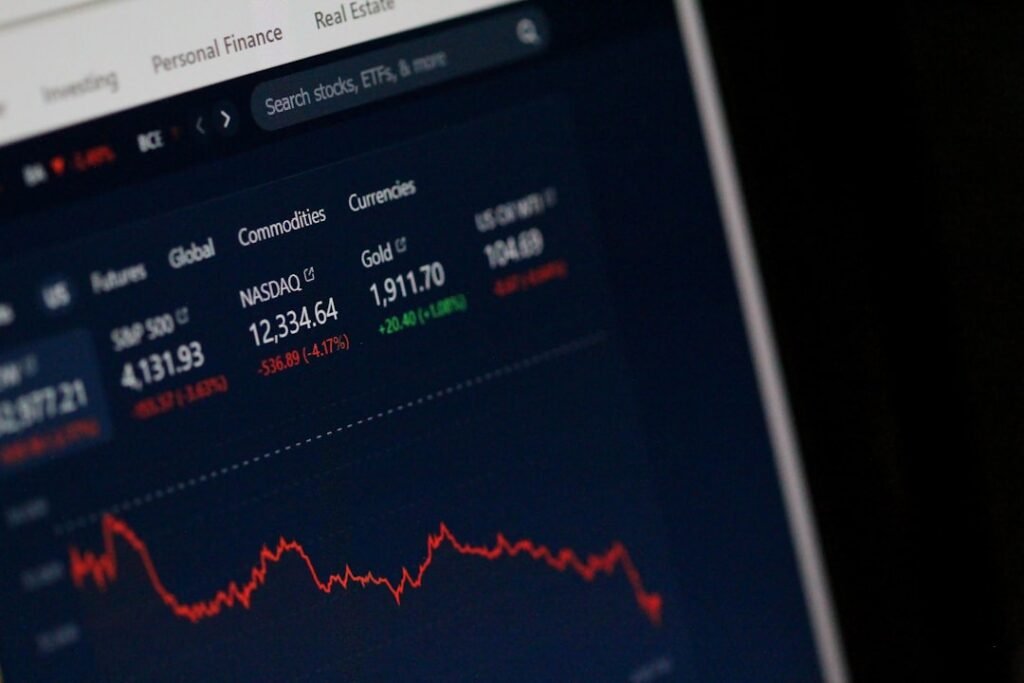
Overview: A High-Stakes NFP Friday for USD and CAD
September 4, 2026 is one of the most event-dense trading days of the month. The U.S. Non-Farm Payrolls report lands at 12:30 UTC — the same moment Canada releases its own employment figures. Add a morning speech from Bank of England Governor Andrew Bailey, and today’s session is genuinely capable of producing sharp, sustained moves across the majors. Traders who are not prepared for volatility, widening spreads, and rapid whipsaws should consider watching rather than trading in the 12:25–13:00 UTC window.
GBP: BoE Governor Bailey Speaks (8:50 AM UTC)
The session’s first high-impact event belongs to sterling. As discussed in our Jackson Hole analysis, central bank guidance from major economy leaders has been a significant market mover in recent weeks, and today is no different. GBP/USD was trading around 1.3526 ahead of the 8:50 UTC appearance, according to live-rates data.
As head of the BoE’s Monetary Policy Committee, Governor Bailey has more influence over sterling’s value than any other person. Traders scrutinize his public engagements as they are often used to drop subtle clues regarding future monetary policy. Volatility is often experienced during his speeches as traders attempt to decipher interest rate clues.
The current context for sterling is particularly sensitive. The Bank of England held Bank Rate at 3.75% in July by a 6–3 vote, with three members preferring an increase to 4%. Although UK inflation declined to 2.6%, the Bank warned that renewed energy-price increases could push inflation higher later in the year. Any language from Bailey today suggesting the BoE is leaning toward a further hike — or, conversely, signalling comfort with the current level — will be closely parsed for GBP directional cues. Traders in GBP/USD and EUR/GBP should note that the morning Construction PMI (forecast 45.8, previous 44.7) also prints at 8:30 UTC, a low-impact release but one that could set the tone just before Bailey takes the podium.
USD: Non-Farm Payrolls, Average Hourly Earnings & Unemployment Rate (12:30 PM UTC)
Today’s NFP is arguably the most consequential U.S. data release before the September 16 FOMC meeting. The context is stark: non-farm payrolls fell by 23,000 in July, well below the consensus forecast of +80,000 and the first negative monthly headline print in the current economic cycle, giving the Federal Reserve a considerably more complicated picture ahead of its September 2026 meeting.
Today’s forecast calls for a rebound to +55,000 — a recovery, but still a modest one by historical standards. The unemployment rate ticked down to 4.1% from 4.2% in July, though the decline reflected a contraction in the labour force rather than stronger hiring, with the labour force participation rate falling to 61.4%. The forecast for today holds the unemployment rate steady at 4.1%. Average hourly earnings rose just 0.1% month-on-month in July versus the +0.3% expected — and today’s consensus calls for a return to that expected 0.3% pace, meaning wage growth is also in the spotlight.
The stakes around today’s print are high because of what it means for Fed policy. As of the latest snapshot, Kalshi prediction markets price a hold at the September 15–16, 2026 FOMC meeting at 73%, with the full ladder reading 26% hike, 73% hold, 1% cut. At Jackson Hole, Chair Warsh stressed the importance of relying on current data, maintaining the 2% inflation target, and prioritizing short-term interest rates — reinforcing market expectations for a cautious but hawkish approach. A strong NFP beat (well above 55K with solid wages) could shift those hike odds meaningfully higher and give the dollar a boost. A miss — especially a second consecutive negative or near-zero print — would likely cement the hold case and weigh on USD.
EUR/USD was trading near 1.1627 ahead of the release. USD/JPY, which saw significant yen strength on Thursday, with the dollar pulling back toward 155.40 against the yen, is also a pair to watch closely around the 12:30 UTC print. The dollar’s problem is “no longer a story about a single print” — “it is a story about a ceiling.” In other words, even a solid NFP beat may struggle to generate a sustained USD rally unless it is accompanied by convincing wage data and a higher unemployment rate does not obscure the headline.
For practical trading: the 12:25–13:00 UTC window is characteristically chaotic on NFP Fridays. Bid-ask spreads widen sharply in the seconds before and immediately after the release, and scalpers in particular are vulnerable to being caught on the wrong side of a fast, liquidity-thin spike. Waiting for the initial volatility to settle — typically 3–5 minutes post-release — and then assessing the market’s true direction is generally the more disciplined approach. Pre-placed stop-losses are not optional on a day like this.
CAD: Employment Change & Unemployment Rate (12:30 PM UTC)
Canada’s jobs report prints at the exact same moment as the U.S. NFP, making USD/CAD a particularly explosive pair at 12:30 UTC today. Canada’s August jobs report lands alongside U.S. NFP on Friday, setting up a potentially volatile hour for CAD traders. After July’s blockbuster gain, markets expect hiring to slow sharply while the Bank of Canada remains focused on excess supply.
Employment in Canada increased by 75,100 in July 2026, well above market expectations for a 15,000 gain, following a revised 18,200 increase in June. Today’s forecast for August is a much more subdued 15.1K — essentially asking whether July’s strength was a one-off or the start of a new trend. The unemployment rate is forecast to hold at 6.4%, the same as July.
USD/CAD was trading around 1.3794 as of the September 3 close, according to Live-Rates.com data. The pair has shown a bearish market structure shift since July, consistent with CAD outperforming on stronger domestic employment and the U.S. labour market’s recent weakness. A CAD employment beat (well above 15.1K) could push USD/CAD lower; a miss, especially if combined with a strong U.S. NFP, could see a sharp USD/CAD rebound. The simultaneous release of both countries’ data means the first 1–2 minutes after 12:30 UTC will likely be extremely erratic and unreliable for entry purposes.
Later in the session, the Ivey PMI (medium impact) is due at 2:00 PM UTC with a forecast of 56.2 versus 55.1 previously. A print above 50 signals expansion in the Canadian economy; this release is unlikely to move the loonie as much as the employment data, but it offers a secondary read on Canadian business conditions and may attract short-term attention if the employment print is ambiguous.
Session Tone and Overall Volatility Assessment
Today is unambiguously a high-volatility session. The triple confluence of U.S. NFP, U.S. Average Hourly Earnings, U.S. Unemployment Rate, Canadian Employment Change, and Canadian Unemployment Rate — all arriving at 12:30 UTC — makes the North American open one of the most event-dense half-hours in the forex calendar. The BoE Bailey speech earlier in the morning adds a second window of GBP volatility. Quiet, range-bound trading conditions in the European morning session could shift dramatically once the London-New York overlap arrives.
The Fed’s policy meeting on September 16 means today’s NFP print is the last major U.S. employment release before that decision. The FOMC meeting from September 15 to 16, 2026 is a major policy event, with the policy decision due on September 16 alongside updated economic projections and the dot plot. Markets are acutely aware of this, which amplifies the potential reaction to any surprise — in either direction — in today’s data.
Traders who are active today are encouraged to define their risk in advance, respect wider-than-normal spreads around each release window, and treat any initial spike as noise until the market has time to digest the full picture. As always, the analysis here is for informational purposes only and does not constitute financial advice.
For traders looking to sharpen their own market analysis between events, the MetaTrader indicators and tools available at mghfx.com can help identify structure, momentum, and key levels across all the pairs discussed today.
Photo by Nicholas Cappello on Unsplash