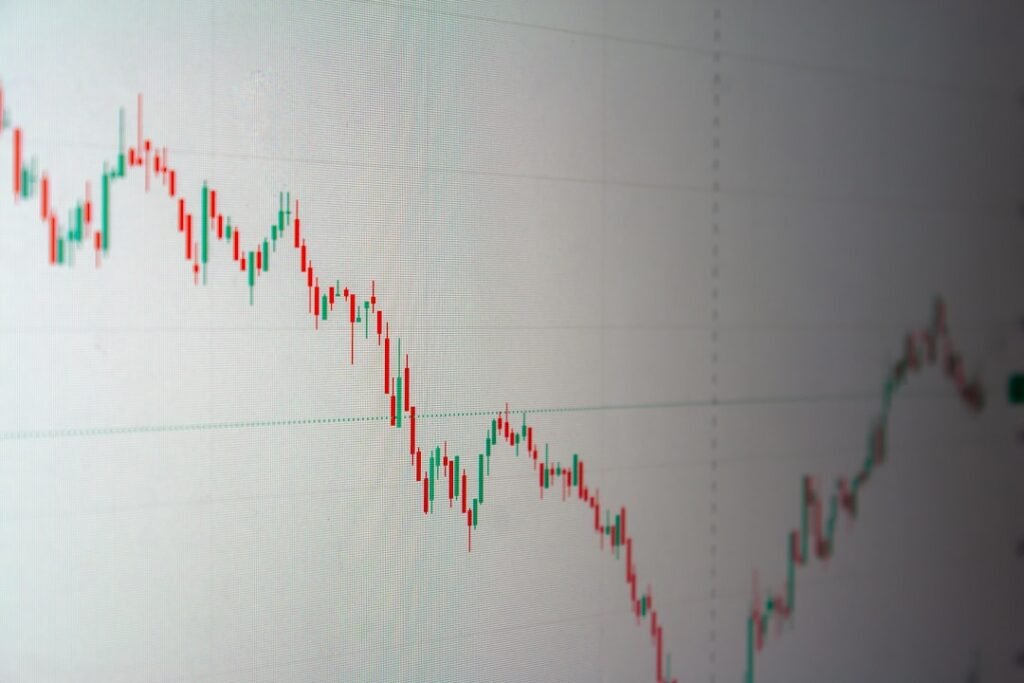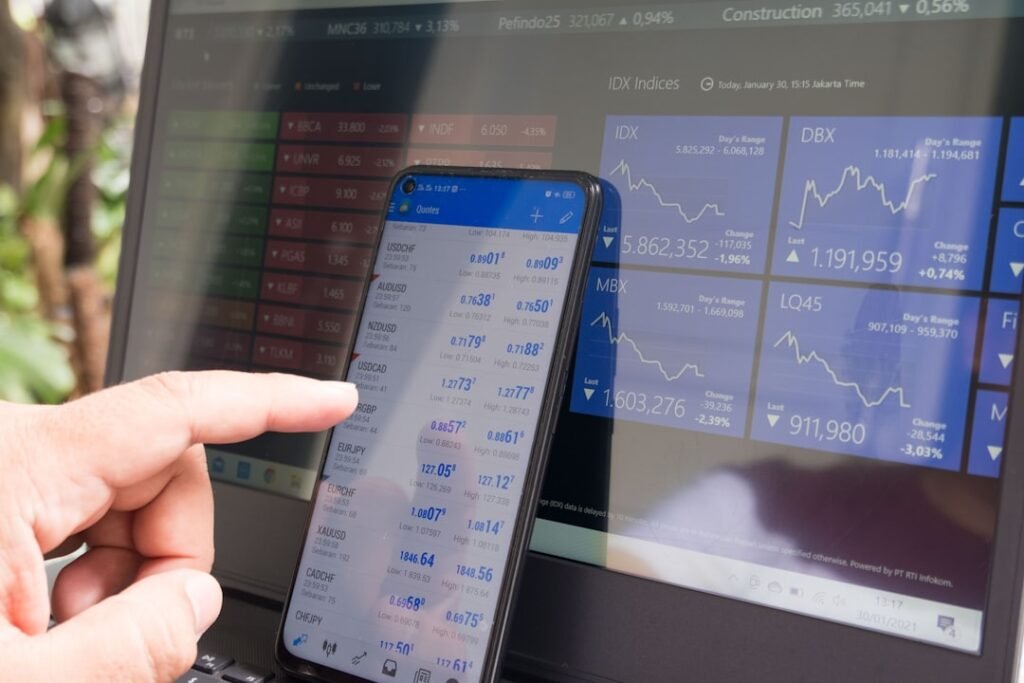
What Is Breakout Trading?
Breakout trading is the practice of entering a position the moment price moves decisively beyond a defined level of support or resistance. The core idea is simple: when price has been contained within a range or pattern for a period of time, the energy building inside that structure eventually has to go somewhere. When it finally breaks free, the resulting move can be fast, directional, and significant.
This is what makes breakout trading so appealing — you are positioning yourself at the starting line of a potential trend, not chasing it after it has already run. Understanding how price action forms and resolves is fundamental to executing breakouts well.
Identifying High-Probability Breakout Setups
Not every level is worth trading. The quality of a breakout depends almost entirely on the quality of the level being broken. Here is what to look for:
Strong Support and Resistance Zones
A level that has been tested multiple times — and held multiple times — carries far more weight than a line you drew once on a chart. Each time price approaches a level and bounces, it adds significance. When that level finally breaks, the traders who were defending it are now caught on the wrong side, and their stop orders fuel additional momentum in the breakout direction.
Look for zones where price has reversed cleanly at least two or three times. Round numbers (e.g., 1.1000 on EUR/USD, 150.00 on USD/JPY) also act as natural psychological barriers and are worth paying attention to.
Chart Patterns That Set Up Breakouts
Several classic chart patterns are essentially coiled-spring structures waiting to break. The most reliable ones include:
- Triangles (ascending, descending, symmetrical): Price compresses into a tighter range, with each swing smaller than the last. The eventual breakout often carries energy proportional to how long the compression lasted.
- Rectangles and ranging channels: Price oscillates between a flat ceiling and floor. A decisive close beyond either boundary signals the start of a new directional move.
- Bull and bear flags: A sharp impulsive move followed by a shallow consolidation. A breakout from the flag in the direction of the original impulse is a continuation signal.
Pairing your breakout analysis with key candlestick patterns — such as a strong engulfing candle or a marubozu closing beyond the level — can add an extra layer of confirmation before you commit to a trade.
Volume as a Confirmation Tool
Volume is one of the most honest signals in trading. A genuine breakout is typically accompanied by a noticeable surge in volume, reflecting broad participation and conviction from the market. A breakout on thin, quiet volume is a red flag — it suggests the move lacks commitment and is more likely to reverse. If your platform or instrument provides volume data, always check it before entering a breakout trade.
Entry Methods: How and When to Get In
There are three main approaches to entering a breakout, each with its own trade-offs:
1. Enter on the Candle Close
Wait for the candle that breaks the level to fully close beyond it. This reduces the risk of being caught by a wick that briefly pierced the level and then pulled back. It is a more conservative entry but still fast enough to capture most of the move.
2. Wait for a Retest
After a genuine breakout, price often pulls back to retest the broken level — which now acts as support (if broken upward) or resistance (if broken downward). Entering on this retest gives you a more precise entry with a tighter stop loss and a better risk-to-reward ratio. The trade-off is that some breakouts never retest, and you may miss the move entirely.
3. Use a Pending Order
Place a buy stop order just above resistance or a sell stop order just below support. Your order triggers automatically when price hits the level, so you don’t need to sit at the screen. This works well for breakout setups that form during off-hours — and it pairs naturally with automated tools if you want the system to manage entries for you.
Being aware of which forex market session a breakout occurs in matters. Breakouts during the London or New York open tend to carry far more momentum than those in low-liquidity periods like the Asian session mid-range.
Managing False Breakouts (Fakeouts)
False breakouts — also called fakeouts — are arguably the biggest risk in breakout trading. Price spikes beyond a level, triggers entries, then snaps back in the other direction, leaving you in a losing trade. Here is how to reduce exposure:
- Require a candle close beyond the level, not just an intraday wick. Wicks that briefly pierce and then close back inside the range are a classic fakeout pattern.
- Avoid trading breakouts into major news events. Volatile news spikes can trigger levels momentarily without any follow-through. Check the economic calendar and be cautious around high-impact releases.
- Use the market context. A breakout in the direction of the broader trend is far more likely to follow through than a counter-trend breakout. Knowing where you are in the larger trend picture matters significantly. Trend-following frameworks can help you keep this context in view.
- Pay attention to momentum indicators. Tools like RSI can reveal whether a breakout is backed by actual momentum or whether it is occurring while momentum is already exhausted. An RSI divergence at the time of a breakout is a warning sign worth heeding.
Risk Management for Breakout Trades
Stop losses on breakout trades should be placed logically — not based on a fixed pip count, but based on where the structure of the trade is invalidated. For a resistance breakout entry, the stop belongs below the broken level (or below the nearest swing low if retesting). If price returns into the old range, the breakout has failed, and there is no reason to hold the trade.
For profit targets, measure the height of the pattern that preceded the breakout and project that distance from the breakout point. This measured move technique gives you a rational, structure-based target rather than guesswork.
Traders who want to automate breakout entries and exits — removing hesitation and emotion from the equation — can find MetaTrader indicators and Expert Advisors built for exactly this kind of rule-based trading at mghfx.com.
Putting It All Together
Breakout trading rewards patience and discipline. The setup has to be right: a meaningful level, a recognizable pattern, a confirmation signal, and a clear risk management plan. When all of those elements align, breakouts offer some of the most compelling risk-to-reward opportunities available in the forex market. When they don’t, the best trade is no trade at all.
This article is for educational purposes only and does not constitute financial or investment advice. Trading forex involves significant risk of loss and is not suitable for all investors.
Photo by Jakub Żerdzicki on Unsplash