What Is the Carry Trade Strategy?
The carry trade is one of the oldest and most institutionally popular strategies in the foreign exchange market. The concept is straightforward: borrow money in a currency with a low interest rate, convert it into a currency with a higher interest rate, and earn the difference between those two rates — known as the interest rate differential. In forex, this differential is reflected daily through what brokers call the swap or rollover rate.
Unlike directional strategies that rely purely on price movement, the carry trade generates a stream of income simply from holding a position overnight. This makes it appealing to traders who want to be compensated for the time they hold a trade open — not just for predicting price direction correctly.
A classic example: if Country A has a central bank interest rate of 5% and Country B has a rate of 0.5%, a trader who buys Country A’s currency and sells Country B’s currency stands to earn roughly the 4.5% annualised differential (minus broker costs), as long as the trade stays open and the exchange rate doesn’t move adversely.
How Carry Trades Work in Practice
The Role of Swap Rates
When you hold a forex position past the daily rollover time (typically 5:00 PM New York time), your broker either credits or debits your account based on the interest rate differential of the pair you’re holding. If you’re long the higher-yielding currency, you receive a positive swap. If you’re long the lower-yielding currency, you pay a negative swap.
These swap amounts are set by your broker and are not identical to raw central bank rates — they include a broker markup. This is why reading your broker’s trading conditions page carefully is essential before building a carry trade position. Two brokers offering the same currency pair can have meaningfully different swap rates, which directly affects your strategy’s profitability.
Choosing the Right Currency Pairs
Carry trades work best with pairs that have a significant and stable interest rate differential. Historically, traders have favoured combinations involving currencies from economies with structurally high rates (such as Australia, New Zealand, or emerging markets) against currencies from low-rate economies (such as Japan or Switzerland). However, rate environments change — central banks raise and cut rates over time — so the best carry pairs shift with the macroeconomic cycle.
When evaluating a pair for carry trading, consider:
- The size of the differential: A wider gap means more daily income, but often more volatility too.
- Central bank stability: A pair where one central bank is likely to cut rates soon carries policy risk that can erode the differential quickly.
- Liquidity: More liquid pairs typically have lower spreads and more transparent swap rates.
The Real Risks of Carry Trading
Exchange Rate Risk Dwarfs Swap Income
The most critical thing any carry trader must understand is this: a small adverse move in the exchange rate can wipe out weeks or months of accumulated swap income in a single session. If you’re earning a 4% annualised swap but the currency pair moves 2% against you in a day, you’re at a net loss. Currency pairs can move far more than the annual yield differential — sometimes in hours.
This is why the carry trade is not a “set and forget” strategy. It requires active monitoring and clear risk management rules, including defined stop-loss levels. Using multiple timeframe analysis can help carry traders identify whether the broader trend supports their position or whether they’re fighting the momentum.
Carry Trade Unwinds: The Crowded Trade Problem
Carry trades tend to be highly popular during periods of low market volatility and risk appetite. When many participants are in the same trade simultaneously, the exit can be brutal. Any shock — a geopolitical event, a surprise central bank decision, or a spike in market fear — can trigger a mass unwinding. Traders rush to close their positions, the high-yielding currency falls sharply, and losses compound quickly.
This dynamic means carry traders should pay close attention to major economic releases and central bank announcements, as these are common catalysts for abrupt carry unwinds. Monitoring risk sentiment indicators and not over-leveraging are both essential habits.
Leverage Amplifies Both Gains and Losses
Retail forex accounts often come with high leverage, which is tempting for carry traders hoping to amplify their swap income. But leverage cuts both ways. A heavily leveraged carry position can be liquidated by a moderate currency move before the trader even has a chance to react. Keeping leverage modest — even if it means smaller daily swap credits — is a core discipline of sustainable carry trading.
Building a Carry Trade Framework
Successful carry traders don’t simply pick the highest-yielding pair and hold indefinitely. They treat it as a systematic strategy with defined rules:
- Entry timing: Enter when the technical trend aligns with the direction of the carry — buying the high-yielder in an uptrend, not into resistance. Pairing carry logic with momentum-based signals can improve entry quality significantly.
- Position sizing: Size positions conservatively enough that a 3–5% adverse currency move doesn’t trigger a margin call or force a premature exit.
- Swap verification: Before entering, confirm the exact swap rate your broker offers, including any triple swap on Wednesdays (which accounts for the weekend rollover).
- Exit plan: Define the conditions under which you’ll close the trade — whether it’s a technical level, a central bank policy change, or a deterioration in risk sentiment — before you open the position.
Traders who want to systematise and automate parts of this process may find value in tools like the MetaTrader indicators and Expert Advisors available at mghfx.com, which can help monitor swap conditions, trend alignment, and trade management rules without having to watch the charts manually around the clock.
Conclusion
The carry trade strategy offers a genuinely distinct source of return in forex — one that doesn’t depend entirely on correctly predicting short-term price direction. By understanding how interest rate differentials translate into daily swap income, and by rigorously managing the exchange rate and unwinding risks that come with the territory, traders can incorporate carry logic into a well-rounded trading approach. Like all strategies, it rewards discipline, preparation, and an honest respect for what the market can do when conditions change.
This article is for educational purposes only and does not constitute financial or investment advice. Trading forex carries significant risk and is not suitable for all investors.
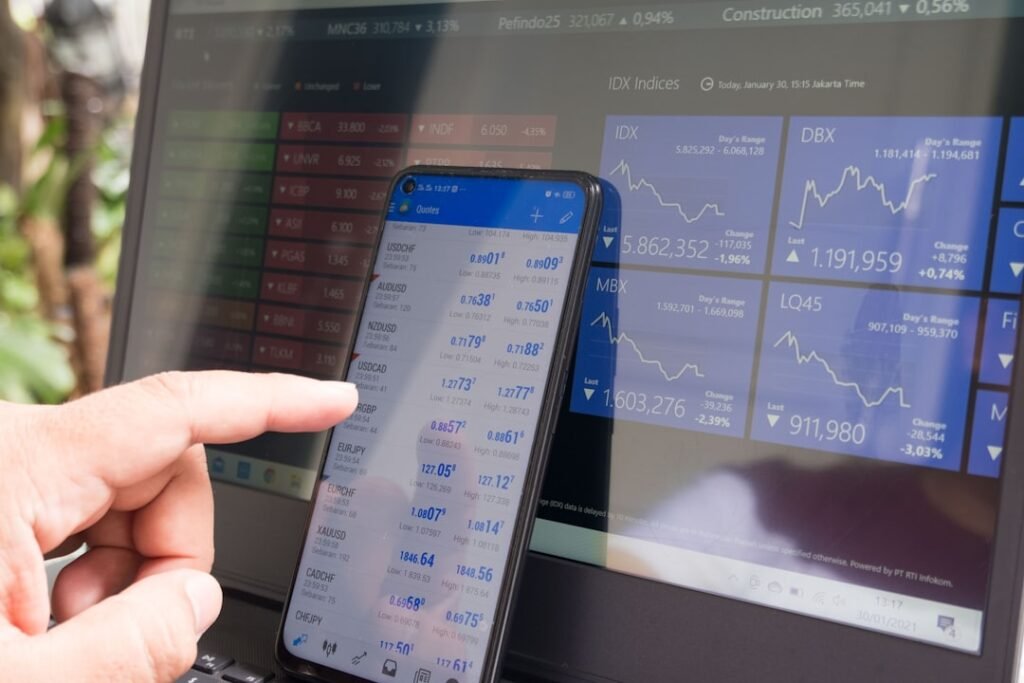
Photo by Kanchanara on Unsplash