What Is Momentum Trading in Forex?
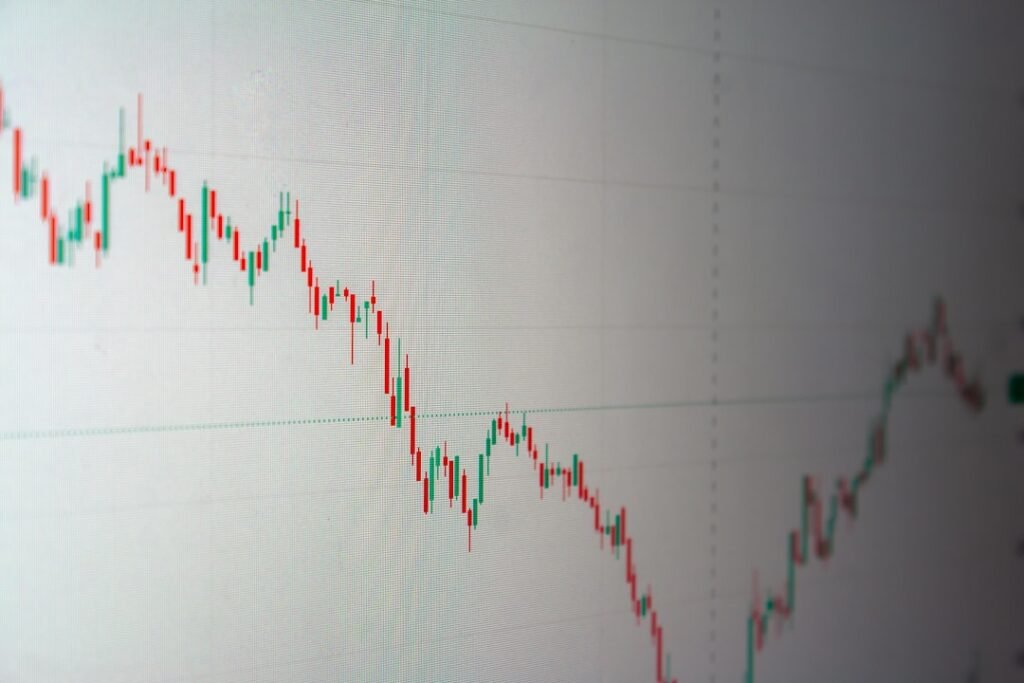
Momentum trading is built on a straightforward premise: currency pairs that are moving strongly in one direction tend to keep moving in that direction — at least for a while. Rather than trying to pick tops and bottoms, momentum traders identify an already-established move and join it, aiming to ride the wave until clear signs of exhaustion appear.
This approach contrasts sharply with strategies like mean reversion trading, where traders bet on prices snapping back to an average. Momentum traders instead trust that strong trends have reasons behind them — macroeconomic flows, institutional positioning, sentiment shifts — and those reasons don’t vanish overnight.
Forex markets are particularly well-suited to momentum strategies. Currencies respond to interest rate differentials, geopolitical events, and economic data releases in sustained, directional waves. When those forces align, a currency pair can trend cleanly for days or even weeks, giving momentum traders multiple opportunities to participate.
Key Momentum Indicators and How to Use Them
No single indicator defines momentum perfectly, but a small group of tools — used together — gives a reliable picture of trend strength and direction.
Relative Strength Index (RSI)
RSI measures the speed and magnitude of recent price changes on a scale of 0 to 100. Many traders treat readings above 70 as “overbought” and below 30 as “oversold,” but momentum traders often interpret these zones differently: an RSI above 60 and rising can confirm that buying pressure is genuinely strong, not exhausted. The key is to look for RSI staying elevated in a bullish trend or staying depressed in a bearish one — not just touching a threshold once.
MACD (Moving Average Convergence Divergence)
MACD tracks the relationship between two exponential moving averages (typically the 12- and 26-period EMAs) and plots the difference as a histogram. When the MACD line crosses above the signal line and the histogram expands, that expansion signals accelerating momentum. A shrinking histogram, by contrast, warns that momentum may be fading even if price hasn’t turned yet — an early exit signal worth watching.
Moving Averages as Momentum Filters
Moving averages don’t just show direction; they also filter noise. A moving average crossover — such as the 20-period EMA crossing above the 50-period EMA — is a classic momentum confirmation signal. Price trading consistently above a rising moving average tells you momentum is intact; price slicing back through it warns of a potential reversal.
Combining Indicators for Confirmation
Using any single indicator in isolation increases false signals significantly. A disciplined momentum setup might require: (1) price above a rising 50-period EMA, (2) RSI above 55 and trending upward, and (3) MACD histogram expanding positively. All three conditions together are far more meaningful than any one of them alone.
Building a Momentum Trade: Entry, Management, and Exit
Entry Timing
The biggest mistake momentum traders make is chasing: entering after a move has already run far, hoping it continues. A better approach is to wait for a brief pullback within the prevailing trend — a one- or two-candle retracement toward a key moving average or support level — and then enter as price resumes in the trend direction. This “pullback entry” reduces risk by tightening the distance to your stop-loss while still capturing the bulk of the remaining move.
It also helps enormously to confirm momentum on more than one timeframe. A strong uptrend on the 4-hour chart means little if the daily chart shows a major resistance zone straight ahead. Multiple timeframe analysis aligns your entry with the bigger picture and dramatically improves your win rate.
Stop-Loss Placement
Momentum trades need room to breathe, but they shouldn’t have loose, oversized stops. A practical rule: place your stop just below the most recent swing low (for a long trade) or above the most recent swing high (for a short trade). If that level is too far away to maintain a sensible risk-to-reward ratio — typically at least 1:2 — skip the trade and wait for a better setup.
Taking Profits and Exiting
Momentum doesn’t last forever, and knowing when to exit is just as important as knowing when to enter. Watch for these warning signs that momentum is fading:
- RSI begins diverging from price — price makes a new high, but RSI does not
- MACD histogram starts shrinking even while price advances
- Price closes back below a key moving average on a confirmed candle
- Unusually long wicks against the trend direction, suggesting rejection
A partial exit strategy — closing half the position at a predefined target and moving the stop to breakeven on the remainder — lets you lock in gains while staying in a trade that might extend further.
Common Pitfalls to Avoid
Momentum trading looks deceptively simple but punishes impulsive decisions harshly. Be aware of these traps:
- Chasing breakouts late: Entering after a large candle has already closed often means buying the peak or selling the bottom. Wait for confirmation and a sensible entry point.
- Ignoring fundamentals: Momentum can be killed instantly by a surprise economic release or central bank announcement. Be aware of the economic calendar and reduce exposure before high-impact events.
- Over-optimizing indicator settings: Tweaking RSI periods or MACD settings until they perfectly fit historical data creates a strategy that works on the past but fails going forward. Keep settings standard and consistent — and read up on indicator optimization pitfalls before experimenting.
- Holding through exhaustion: Momentum traders must accept that they will never catch the exact top or bottom. Getting out early and banking a solid profit is a discipline, not a failure.
Putting It All Together
Momentum trading in forex rewards patience and discipline above all else. The best setups come when multiple timeframes agree, indicators confirm strength without being overstretched, and risk-to-reward ratios are clearly favorable before you place the trade. When those conditions align, momentum trades can be among the cleanest and most profitable setups the forex market offers.
For traders who want to take this further, MGH Products offers MetaTrader indicators and Expert Advisors at mghfx.com designed to help identify and act on momentum signals with greater consistency — well worth exploring as part of your trading toolkit.
Disclaimer: This article is for educational purposes only and does not constitute financial or investment advice. Trading forex carries significant risk, and you should only trade with capital you can afford to lose.
Photo by Jakub Żerdzicki on Unsplash