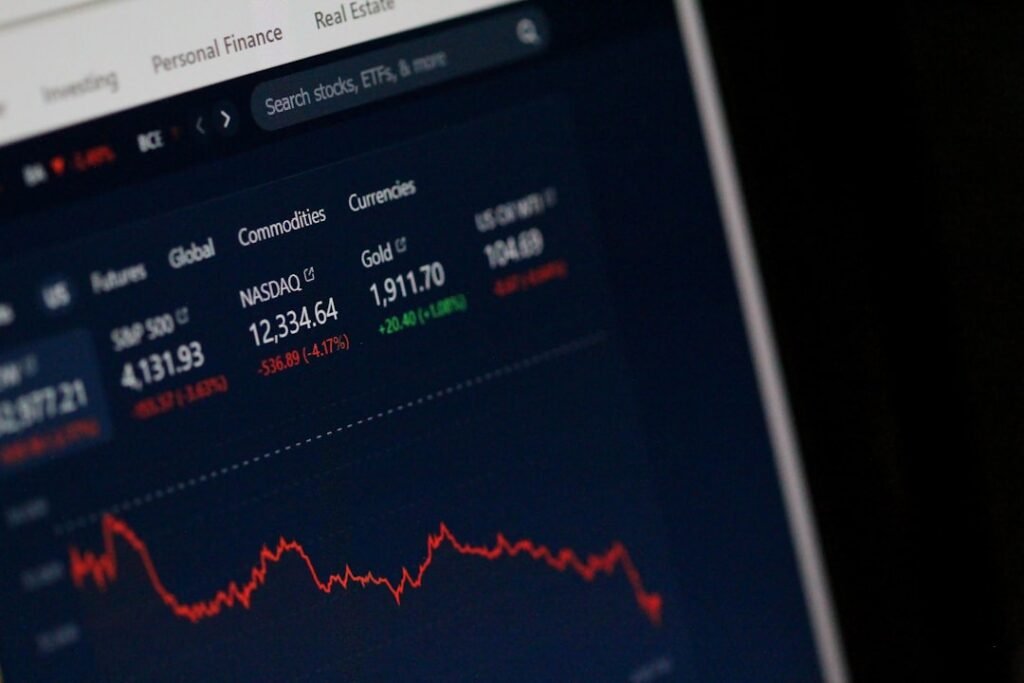
Overview: A Data-Heavy Thursday Across Three Currencies
October 15, 2026 is one of the busiest single-day calendars of the month. Australian labour figures hit in the overnight session, UK GDP arrives at the European open, and then the U.S. fires off a simultaneous bundle of producer price inflation and consumer spending data at midday New York time. Traders watching any of the majors — AUD/USD, GBP/USD, or USD/JPY — will need to manage risk carefully around each release window. This is not financial advice; the analysis below is intended to help traders understand the risk environment, not to direct any specific trade.
AUD: Employment Data at 12:30 AM UTC — Volatility Before Most Are Awake
The Australian Bureau of Statistics released its September Labour Force report at 12:30 AM UTC. The market consensus, as cited by NAB, Westpac, and broader analyst surveys, was for Employment Change to come in around 19.6K–20K new jobs — a notable step down from the 39.5K gain recorded in August. The Unemployment Rate was forecast to hold steady at 4.6%, which, according to FXStreet, already represents a five-year high for Australian joblessness.
The context here matters. With NAB, Westpac and consensus all grouped around 20,000 and three major banks projecting unemployment at 4.6%, the bar for a surprise sits mainly in the jobless rate: a drop to 4.5% would revive the case for further RBA tightening and could support the Australian dollar and short-dated yields, while a rise to 4.7% would push the other way, adding weight to the view that current rates are already doing enough.
AUD/USD ended the previous session at 0.6971. A further increase in joblessness would strengthen the case against another Reserve Bank of Australia rate hike after last month’s increase lifted the cash rate to 4.60%. For traders, AUD/USD is the primary pair to watch around this release. A headline employment beat combined with an unchanged or lower unemployment rate would be the most supportive outcome for the Aussie dollar. A miss on jobs combined with a jobless rate tick higher would likely pressure AUD/USD lower, particularly if it confirms a soft trend after the August data outperformed expectations so strongly. Be aware that liquidity can be thin at this hour, and spreads may widen sharply on the number itself — a disciplined news-trading approach around the release is essential.
GBP: Monthly GDP at 6:00 AM UTC — Sterling Enters a Difficult Morning
The Office for National Statistics releases UK GDP m/m for August at 6:00 AM UTC. The forecast is -0.1%, reversing sharply from the previous reading of +0.4%. That prior 0.4% print in July was itself a strong beat — the ONS had originally guided toward 0.0% growth and came in far stronger. A return to contraction in August would signal that July’s outperformance was not sustained.
GBP/USD was trading near 1.3254 heading into today’s release. The pair ran into resistance at 1.3650 before moving lower and now consolidates above 1.3200 but below 1.3280, sitting beneath both its 50 and 200 EMAs. The technical setup already leans cautious for sterling, and a confirmed GDP contraction would remove a key fundamental support pillar.
Alongside GDP, the ONS is simultaneously releasing Construction Output, Goods Trade Balance, Index of Services (3m/3m), Industrial Production, and Manufacturing Production — all at the same 6:00 AM UTC timestamp. This creates a complex picture at the open of the London session. Industrial Production m/m is forecast at -0.1% (previous: +0.2%) and Manufacturing Production m/m is also forecast at -0.1% (previous: +0.9%), adding to the broadly weak expectations for the UK’s industrial sector.
At 7:30 AM UTC, Bank of England Governor Bailey speaks — traders should note this falls less than 90 minutes after the GDP print, meaning Bailey’s tone could compound or soften the initial market reaction. Additional MPC members Greene and Breeden also speak later in the morning session. The pound-dollar rate could face renewed pressure if US inflation later in the day strengthens the dollar, while further hawkish BoE signals may keep sterling partially supported. If GDP prints at or below -0.1% and Bailey sounds cautious, GBP/USD could test the lower end of its recent range around 1.3190. A positive GDP surprise — say 0.0% or better — could spark a short-covering bounce toward 1.3280, but upside is likely capped ahead of the afternoon USD event risk.
USD: A Simultaneous Data Dump at 12:30 PM UTC — The Day’s Pivotal Moment
The most consequential window of October 15 arrives at 12:30 PM UTC when the U.S. Bureau of Labor Statistics and Census Bureau release four high-impact data points at exactly the same moment, followed by the Philly Fed Manufacturing Index and weekly Unemployment Claims in the same print.
PPI m/m and Core PPI m/m
PPI m/m is forecast at 0.6%, up from the previous reading of 0.4%, measuring the change in the price of goods sold by manufacturers and serving as a leading indicator of consumer price inflation. Core PPI m/m — which excludes food and energy — is forecast at 0.3%, up from the prior 0.2%, measuring underlying inflationary pressures from producers that may be passed to consumers.
This release comes one day after Wednesday’s CPI print, which itself was a significant market mover. PPI will add another piece to the inflation picture following Wednesday’s CPI. If both headline and core PPI come in at or above their forecasts, the market will likely interpret this as a confirmation of persistent producer-level inflation, which could push Treasury yields higher and strengthen the dollar across the board. EUR/USD, which fell to 1.1133 on October 14 — already near its weakest level since May 2025 — could see further downside pressure on a hot PPI print. USD/JPY, which has been hovering near 158.48 on October 14, could push toward the psychologically significant 160 level if dollar strength accelerates.
Retail Sales m/m and Core Retail Sales m/m
Retail Sales m/m is forecast at 0.3%, against a previous reading of 1.2%, measuring the change in total value of sales at the retail level and serving as the foremost indicator of consumer spending. Core Retail Sales (ex-autos) is forecast at 0.6%, down from the prior 1.4%. The prior August reading of 1.2% month-over-month was the strongest in five months. A natural pullback is expected, and the consensus reflects that. The risk, therefore, is asymmetric: a print near or above 0.6% on the headline would be modestly positive for the dollar and suggest consumer resilience, while a significant undershoot — say below 0.1% — could raise growth concerns and trigger a sell-off in USD.
PPI and retail sales will compete for the top influence on Thursday, with claims and the Philly Fed also releasing at the same time. Retail sales will show whether consumer spending continues to support growth, while claims will provide a timely labor-market check and the Philadelphia Fed survey offers an early look at October manufacturing conditions.
The simultaneous release of six data points at 12:30 PM UTC creates a notoriously difficult trading environment. If the numbers conflict — for example, a hot PPI but a miss on retail sales — initial moves can be erratic and reversals are common within the first 10–15 minutes. Multi-timeframe analysis can help traders identify whether the post-release trend direction is holding on higher timeframes before committing to a position.
Philly Fed Manufacturing Index and Unemployment Claims
As a medium-impact release bundled into the same 12:30 PM UTC window, the Philadelphia Fed Manufacturing Index is forecast at 28.2 versus a previous reading of 37.8 — a notable step down that would suggest manufacturing conditions in the mid-Atlantic region are cooling. Weekly Unemployment Claims are forecast at 199K, barely changed from the prior 197K, consistent with a still-healthy labour market. Neither of these is likely to be the dominant driver on the day given the heavier weight of PPI and retail sales, but a large Philly Fed miss could weigh on risk sentiment at the margin.
EUR: EU Economic Summit — Monitoring for Policy Signals
The EU Economic Summit continues through Thursday, with day two starting around 10:15 AM UTC. The summit is a two-day affair, with day one having taken place on October 14. Headline risk from summit communiqués is real — any unexpected statements on EU fiscal policy, financial frameworks, or defence spending could move EUR crosses. The EUR/USD pair is already under pressure, trading near 1.1193, and further hawkish USD data later in the day could compound that weakness. Traders in EUR crosses should keep headlines open during the summit window.
Overall Session Tone: High Volatility, Multiple Risk Windows
October 15 is firmly in the “active and potentially volatile” category. Three distinct risk windows — the AUD jobs print overnight, the UK GDP complex at the London open, and the U.S. data torrent at New York lunchtime — means that virtually every major currency pair faces scheduled event risk during regular trading hours. For traders who prefer to let data settle before acting, waiting for the 12:30 PM UTC dust to clear and then assessing the confirmed directional momentum is a sensible approach. Those trading AUD or GBP in the early sessions should size positions conservatively given the asymmetric headline risk. The USD remains the anchor currency for the afternoon, and the combined PPI and retail sales result will likely define the overall tone heading into the weekly close.
Traders looking to systematically track these event-driven price structures may find MGH Products’ MetaTrader indicators useful for their own analysis — available at mghfx.com. As always, nothing in this article constitutes financial advice, and all trading decisions should be made with appropriate risk management in place.
Photo by Tötös Ádám on Unsplash