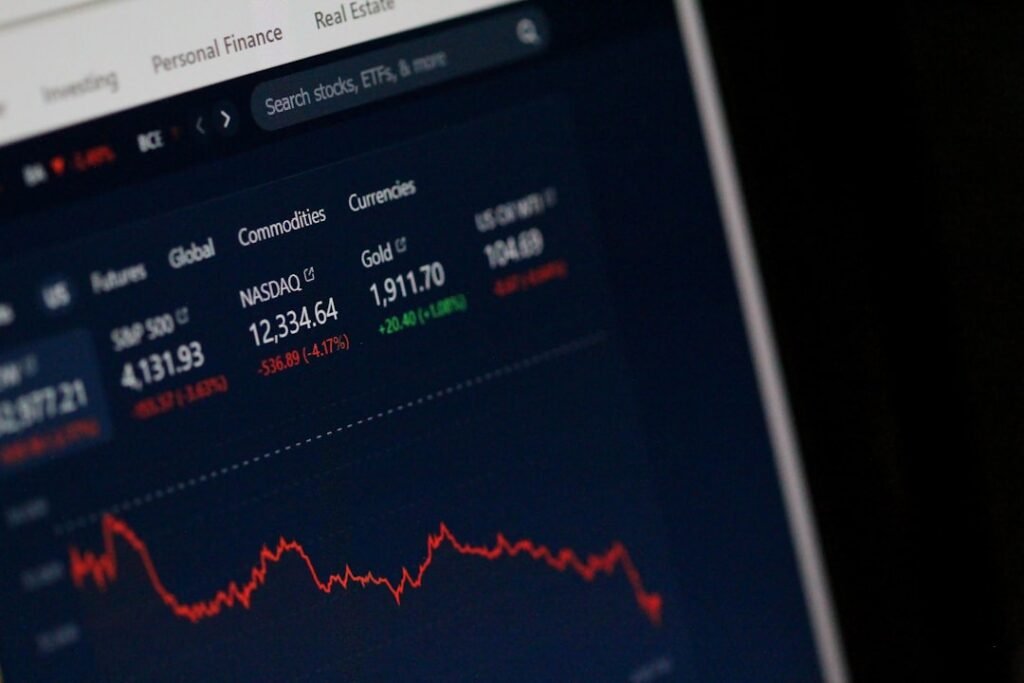
Overview: A Central Bank Speech Day in Bangkok
Friday’s economic calendar is unusually light on hard data releases, but it more than makes up for it with firepower at the top: two of the world’s most closely watched central bank governors are both scheduled to speak at the IMF–World Bank Annual Meetings in Bangkok. Bank of England Governor Andrew Bailey appears at 2:00 AM UTC, followed by Federal Reserve Chairman Kevin Warsh at 3:30 AM UTC. The timing matters — according to FXStreet, Warsh’s Bangkok appearance is effectively his final public window before the Fed enters a media blackout ahead of its October 27–28 policy meeting. For GBP and USD traders, this session demands attention even though there are no scheduled rate decisions or data prints to anchor moves.
HIGH IMPACT: GBP — BOE Governor Bailey Speaks (2:00 AM UTC)
As head of the Bank of England’s Monetary Policy Committee (MPC), Governor Bailey holds more direct influence over sterling’s value than any other individual, and markets have been scrutinising his recent public comments very carefully. According to Investing.com, over the last ten releases, a Bailey speech has triggered an average of around 24.73 pips of volatility in GBP/USD — modest but not negligible, especially in low-liquidity early Asian hours.
The backdrop matters here. Bailey spoke at the October 8 Istanbul Economic Forum, where, according to ForexTraders.com, he stressed an “unwavering commitment to returning inflation to target” while deliberately giving no steer on the next rate move. He told the audience he remains sceptical of unconditional promises about future interest rates, given global uncertainty — leaving the speech more about framework than rate path. His tone since then has visibly hardened: according to FXStreet, Bailey warned in late September that persistently high energy prices make a hold harder to justify, and that the Bank “cannot wait for complete evidence” on inflation expectations.
Markets are currently pricing a roughly 82–87% probability of a November rate hike by the BoE, according to Global Banking & Finance Review. Heading into today’s speech, GBP/USD is trading near 1.3274, having recovered from lows around 1.3184 earlier in the session. The Bank of England’s current policy rate sits at 3.75%.
For traders, the practical read is this: if Bailey endorses the November hike view — even obliquely — rate support for the pound stays in place and GBP/USD could push above the 1.3276 intraday high. Conversely, any sign of patience or emphasis on weaker labour market data could pare hike odds and weigh on sterling. Because the speech occurs at 2:00 AM UTC, liquidity is thin and whipsaw risk is elevated. Experienced news traders typically watch for the initial spike to fade before positioning, rather than chasing the first tick.
HIGH IMPACT: USD — Fed Chairman Warsh Speaks (3:30 AM UTC)
This is the headline event of the day for dollar traders. According to ROIC.ai, Federal Reserve Chairman Kevin Warsh is scheduled for a fireside chat with IMF Managing Director Kristalina Georgieva at the Bangkok meetings on October 16 — an unusually public format for a Fed chair who has deliberately avoided forward guidance since taking office in May 2026.
The stakes are high. According to KuCoin/BlockBeats, the Fed enters a media blackout this Saturday ahead of its October 27–28 FOMC meeting, making today’s Warsh appearance effectively the last opportunity for the Fed to signal its policy intentions to markets before the blackout begins. The September CPI data released Wednesday showed annual headline inflation accelerating to 3.7%, above the 3.6% forecast, while core inflation came in at 2.6%, also above the 2.5% consensus, according to Trading Economics — data that has clearly reignited rate-hike expectations. According to MUFG Research, the DXY closed September 2.0% higher, and the dollar is now up 3.77% year-on-year.
Warsh has been consistently hawkish in framing but has refused to commit to a rate path. At Jackson Hole, according to Yahoo Finance, he said the Fed must be “confident that underlying inflation is moving to our objective, clearly and at sufficient speed,” adding he would be “hard-pressed to describe broad financial conditions as restrictive.” According to FOMC minutes released October 7, most policymakers see another rate increase as appropriate before year-end, with markets currently pricing an October pause followed by a December hike.
The DXY pulled back from an 18-month high just under 103.00 on Thursday, dropping to around 102.10, according to FXStreet, as an AI stock rout pushed money into Treasuries. That means the dollar enters this speech in a softer position — potentially amplifying any hawkish surprise from Warsh.
The key question for traders: does Warsh signal that the October meeting is still live, or does he reinforce the market’s current base case of a December hike? Any language suggesting financial conditions are “not restrictive” or that inflation is proving stubborn could push DXY back toward the 102.50–103.00 zone. A more cautious tone — emphasising the need to watch incoming data — could extend Thursday’s pullback. With the 3:30 AM UTC slot falling in thin early-morning trading, spread widening and false breakouts are a real risk. Using trend-following indicators after the initial dust settles, rather than trading the first reaction, is a more disciplined approach on a speech day with no quantitative forecast to anchor results.
For prior context on USD dynamics this week, see our October 14 analysis covering USD CPI and central bank speeches.
MEDIUM IMPACT: CAD — BOC Governor Macklem Speaks (4:15 AM UTC)
Bank of Canada Governor Tiff Macklem also participates in an IMF panel in Bangkok at 4:15 AM UTC, according to the Bank of Canada’s official events page. The BoC policy rate stands at 2.25%, unchanged since a quarter-point cut in October 2025, according to Trading Economics — marking seven consecutive holds.
The backdrop is delicate for the Canadian dollar. According to InvestingLive, headline inflation is running above target largely due to gasoline prices, while core measures sit near 2%. Back-to-back monthly job losses and new U.S. tariffs have weakened the growth outlook and caused markets to trim October hike bets, though a December move is still being priced. Scotiabank’s head of capital markets economics Derek Holt, according to CBC, has forecast 75 basis points of rate hikes starting in Q4 2026. Macklem has previously said the BoC can “look through” a temporary oil price shock, but cannot ignore persistent energy-driven inflation.
Because Macklem’s panel follows the Bailey and Warsh speeches by only a short window, CAD pairs may still be reacting to USD volatility when he speaks, complicating any clean read. USD/CAD traders should treat the 4:00–5:00 AM UTC window as a period of elevated cross-currency noise. For those tracking the longer-term CAD story, our October 9 piece on the Canadian jobs report provides useful context on the labour-market data that has been pressuring BoC hike expectations.
LOW IMPACT: EUR and USD Data in the European and US Sessions
Eurozone final CPI y/y for September is confirmed at 3.8% (forecast matching previous), and final core CPI y/y is confirmed at 2.5% (also matching prior), both due at 9:00 AM UTC. Because these are final readings and both match prior figures exactly, they are unlikely to move EUR/USD on their own — no revision surprise means no fresh signal. The Eurozone trade balance (forecast 4.5 billion, previous 5.0 billion) and Italian trade balance (forecast 7.50 billion, previous 8.24 billion) both print today as well, with slight deteriorations expected. These are routine reads.
In the U.S. session, USD Import Prices m/m (forecast 0.9%, previous 0.7%) at 12:30 PM UTC, Capacity Utilization (forecast 76.5%, previous 76.3%) and Industrial Production m/m (forecast 0.4%, previous 0.0%) at 1:15 PM UTC are on the schedule. All three are expected to show modest improvement, which would generally be mildly supportive of the dollar — but their impact will almost certainly be overshadowed by whatever Warsh said at 3:30 AM UTC. The Federal Budget Balance at 6:00 PM UTC (forecast -34.7 billion, previous -166.8 billion) and TIC Long-Term Purchases at 8:00 PM UTC (forecast 75.2 billion, previous -27.9 billion) close out the day. The latter is notable in magnitude — a sharp swing from outflows to large inflows in foreign purchases of U.S. long-term securities — but rarely generates instant market reaction. Bundesbank President Nagel also speaks at 2:30 AM UTC for additional EUR context.
Overall Session Tone: Volatile in Asia, Calmer in Europe
Today’s session is front-loaded with event risk. The 2:00–5:00 AM UTC window, spanning Bailey, Warsh, and Macklem in rapid succession, is likely to be the most volatile period across GBP, USD, and CAD pairs. Because all three are speech events with no quantitative forecast to measure against, the potential for rapid sentiment pivots — especially in thin early-morning liquidity — is elevated. Traders who prefer defined risk parameters may find it more prudent to stand aside during the speech windows and look for trend re-entries once the market has digested the comments. The European session, by contrast, has little of note beyond the confirmation of already-known CPI readings, and may offer a calmer environment for technically-driven setups.
On balance, this is an active day for GBP and USD specifically. EUR and CAD face secondary exposure through cross effects rather than direct catalysts of their own.
Disclaimer: This article is for informational and analytical purposes only and does not constitute financial advice. All trading involves risk. Always do your own research before making any trading decisions.
Traders looking to build structured, rule-based approaches around central bank speech days can explore the MetaTrader indicators and expert advisors available at mghfx.com — tools designed to help you define entries, exits, and risk parameters with greater precision.
Photo by Adam Śmigielski on Unsplash