Introduction: Two Platforms, One Big Decision
When you first step into the world of forex and CFD trading, one of the earliest decisions you will face is choosing a trading platform. For the vast majority of retail traders, this choice comes down to two names: MetaTrader 4 (MT4) and MetaTrader 5 (MT5). Both are developed by MetaQuotes Software and share a familiar look and feel, but beneath the surface they differ in meaningful ways. Understanding those differences will help you select the platform that best fits your trading style, goals, and the markets you want to access.
What MT4 Does Best
MetaTrader 4 was released in 2005 and quickly became the gold standard for retail forex trading. Decades later, it remains enormously popular — and for good reason.
Simplicity and Familiarity
MT4 was designed with the forex trader in mind. Its interface is clean, its learning curve is gentle, and almost every forex broker in the world supports it. If you are new to trading or focused exclusively on currency pairs, MT4 gives you everything you need without overwhelming complexity.
A Vast Ecosystem of Tools
Because MT4 has been around for so long, it has accumulated one of the largest libraries of custom indicators, Expert Advisors (EAs), and scripts ever assembled on a single platform. The MQL4 programming language is well-documented, widely taught, and supported by a huge global community. Finding ready-made tools, hiring developers, or learning to code your own strategies is straightforward in this ecosystem.
Proven Stability
MT4 is a mature, battle-tested platform. Traders who need reliable execution, consistent charting, and a predictable environment often prefer it precisely because it has had two decades to iron out issues. For algorithmic traders running EAs around the clock, this stability matters enormously.
The main limitation of MT4 is scope. It was built for forex and CFDs, and it shows. If you want to trade equities, futures, or options natively, MT4 was not designed with those asset classes in mind.
What MT5 Brings to the Table
MetaTrader 5 was released in 2010 as a next-generation platform. Despite its name, it is not simply an “upgrade” of MT4 — it is a fundamentally different piece of software built on a different architecture and coded in MQL5, a separate programming language.
Multi-Asset Trading
The most significant advantage of MT5 is its native support for multiple asset classes. Beyond forex and CFDs, MT5 supports equities, futures, and exchange-traded instruments. If your broker offers stocks or futures alongside forex, MT5 is the platform that can handle them all in a single interface.
More Analytical Depth
MT5 ships with 38 built-in technical indicators (compared to MT4’s 30), 44 graphical objects, and additional chart timeframes — including more granular timeframes like 2-minute, 3-minute, and 4-hour charts that MT4 does not include by default. It also features an economic calendar built directly into the platform, a depth-of-market (DOM) window for viewing order book data, and a more advanced strategy tester that supports multi-currency and multi-threaded backtesting.
Faster, Smarter Backtesting
For algorithmic traders, MT5’s strategy tester is a significant step forward. It supports multi-threaded optimization, meaning it can run backtests across multiple CPU cores simultaneously, dramatically reducing the time needed to test and refine an EA across thousands of parameter combinations. The tick data quality available in MT5 backtests is also generally superior to MT4.
The MQL5 Language
MQL5 is an object-oriented language closer in structure to C++. It is more powerful than MQL4 for complex programming tasks, but it also has a steeper learning curve. The MQL5 community marketplace is growing rapidly and now rivals MT4’s library in breadth, though MQL4 still holds the edge in sheer volume of legacy tools.
One important note: MQL4 and MQL5 are not cross-compatible. An EA or indicator written for MT4 will not run on MT5 without being rewritten, and vice versa.
Key Differences at a Glance
- Asset classes: MT4 focuses on forex and CFDs; MT5 supports forex, CFDs, equities, and futures.
- Timeframes: MT4 has 9 built-in timeframes; MT5 has 21.
- Indicators: MT4 includes 30 built-in indicators; MT5 includes 38.
- Order types: MT5 adds two additional pending order types (Buy Stop Limit and Sell Stop Limit) not available in MT4.
- Strategy tester: MT5 supports multi-threaded backtesting and multi-currency testing; MT4 does not.
- Programming language: MT4 uses MQL4; MT5 uses MQL5. They are not compatible with each other.
- Community and tools: MT4 has a larger legacy library; MT5’s library is growing fast.
- Economic calendar: Built into MT5; not natively available in MT4.
So, Which Platform Should You Choose?
The honest answer is: it depends on what you trade and how you trade it.
Choose MT4 if you trade forex exclusively, prefer a simpler environment, rely on a specific MT4-only indicator or EA, or your broker does not fully support MT5. MT4 is also a natural choice for beginners who want to focus on learning the markets without being distracted by additional complexity.
Choose MT5 if you want access to multiple asset classes, value more advanced backtesting, need additional timeframes and order types, or are building new automated strategies from scratch. MT5 is the platform that MetaQuotes is actively developing, which means it will continue to receive new features and long-term support.
If you use automated tools or custom indicators, check compatibility before committing. Many professional-grade indicators and Expert Advisors are now available for both platforms — including those available at mghfx.com, where MGH Products offers MetaTrader indicators and EAs designed to support traders working with both MT4 and MT5.
Closing Thoughts
Neither platform is objectively superior — each excels in its own context. MT4 is a reliable, well-understood workhorse that continues to serve millions of forex traders every day. MT5 is a more powerful, future-proof environment suited to traders who need broader market access and deeper analytical tools. Take the time to open demo accounts on both, explore their interfaces, and see which one aligns naturally with the way you think about the markets. The right platform is simply the one that helps you trade more clearly and more consistently.
Disclaimer: This article is intended for educational purposes only and does not constitute financial or investment advice. Trading forex and CFDs carries significant risk and may not be suitable for all investors. Always conduct your own research and consult a qualified financial professional before making trading decisions.
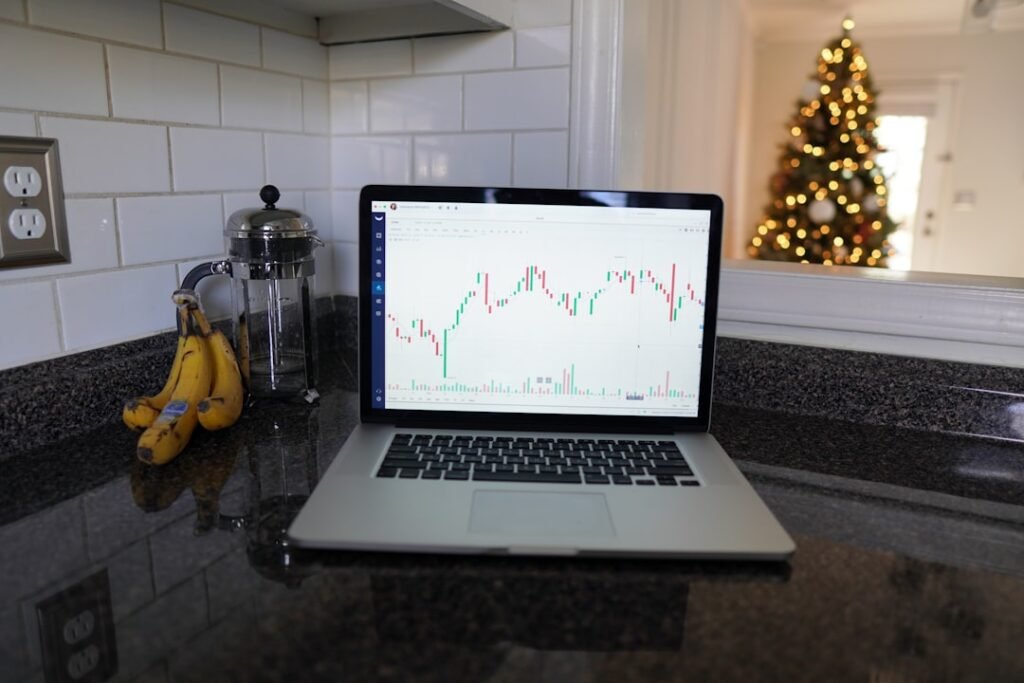
Photo by Arturo Añez on Unsplash