Why Forex Vocabulary Is Your First Line of Defense
Before you place a single trade, before you read a chart, and long before you consider risking real capital, you need to speak the language of the forex market. Terminology is not just jargon — it is the framework through which every price, every risk calculation, and every strategy decision is expressed. New traders who skip this step often misread trade setups, miscalculate position sizes, or misunderstand broker conditions. This guide covers the core vocabulary you will encounter every day as a forex trader.
Price and Market Structure Terms
Pip and Pipette
A pip (Percentage in Point) is the standardized unit of movement in a currency pair’s price. For most pairs, it is the fourth decimal place — so a move from 1.1050 to 1.1055 is a 5-pip move. Some brokers quote prices to a fifth decimal place; that smallest increment is called a pipette (one-tenth of a pip). Understanding pips is essential because profit, loss, and risk are all measured in them.
Bid, Ask, and Spread
Every currency pair has two prices quoted simultaneously: the bid (the price at which the market will buy from you, and you sell) and the ask (the price at which the market will sell to you, and you buy). The difference between these two prices is the spread. The spread is effectively the broker’s transaction cost. A tighter spread means lower cost to enter and exit trades, which matters especially for short-term strategies.
Base Currency and Quote Currency
In any currency pair, the first listed currency is the base currency and the second is the quote currency. In EUR/USD, the euro is the base and the US dollar is the quote. The price tells you how many units of the quote currency are needed to buy one unit of the base currency. This distinction matters when calculating profit and loss in your account’s denomination.
Trade Sizing and Leverage
Lots
Forex is traded in standardized sizes called lots. A standard lot equals 100,000 units of the base currency. A mini lot is 10,000 units, a micro lot is 1,000 units, and a nano lot (offered by some brokers) is 100 units. Lot size directly controls how much monetary value each pip movement represents. For example, with a standard lot on EUR/USD, each pip is worth approximately $10. Choosing the right lot size is one of the most important risk management decisions a trader makes.
Leverage and Margin
Leverage allows you to control a position larger than your deposited capital. It is expressed as a ratio — for example, 100:1 leverage means $1,000 of your own funds can control a $100,000 position. While leverage amplifies potential gains, it equally amplifies potential losses, which is why understanding it before using it is non-negotiable.
Margin is the portion of your account equity that your broker sets aside as a deposit to open and maintain a leveraged position. It is not a fee — it is collateral. Used margin is what is currently locked up in open trades; free margin is what remains available to open new positions or absorb losses.
Margin Call and Stop Out
If your account losses reduce your equity to a critically low level relative to your used margin, your broker issues a margin call — a warning that your account is underfunded. If the equity falls further to the broker’s stop-out level, positions are automatically closed to prevent your balance from going negative. Knowing these thresholds is essential for position sizing and survival in volatile markets.
Order Types and Trade Management
Market Orders, Limit Orders, and Stop Orders
A market order executes immediately at the best available current price. A limit order is set at a specific price and will only execute if the market reaches that price — typically used to enter at a better price or take profit. A stop order (including stop-loss orders) is triggered when the market moves to a specified level, most commonly used to cap losses on an open position.
Stop-Loss and Take-Profit
A stop-loss is a pre-set instruction to close a losing trade at a defined price, protecting you from unlimited losses. A take-profit is the opposite — it closes a winning trade automatically when a target price is reached. Together, these two orders form the backbone of disciplined trade management. Entering a trade without a stop-loss is one of the most common and costly mistakes beginners make.
Slippage and Requotes
Slippage occurs when an order is filled at a different price than requested, usually during fast-moving markets or low liquidity. Requotes happen when a broker cannot fill your order at the requested price and offers you a new price instead. Both are realities of live trading, particularly around high-impact economic news releases.
Putting It All Together
Mastering forex terminology does not make you a profitable trader by itself — but not knowing it almost guarantees you will make avoidable, expensive mistakes. Every concept above will appear in your broker platform, your trading journal, and every strategy you study. Work through them until they become instinctive.
Once you are comfortable with the language of the market, the next step is applying these concepts consistently. Tools like those available at mghfx.com — including MetaTrader indicators and Expert Advisors — can help you visualize these concepts in action and structure your trading approach more systematically.
Disclaimer: This article is for educational purposes only and does not constitute financial or investment advice. Trading forex involves significant risk of loss and may not be suitable for all investors. Always conduct your own due diligence before trading with real capital.
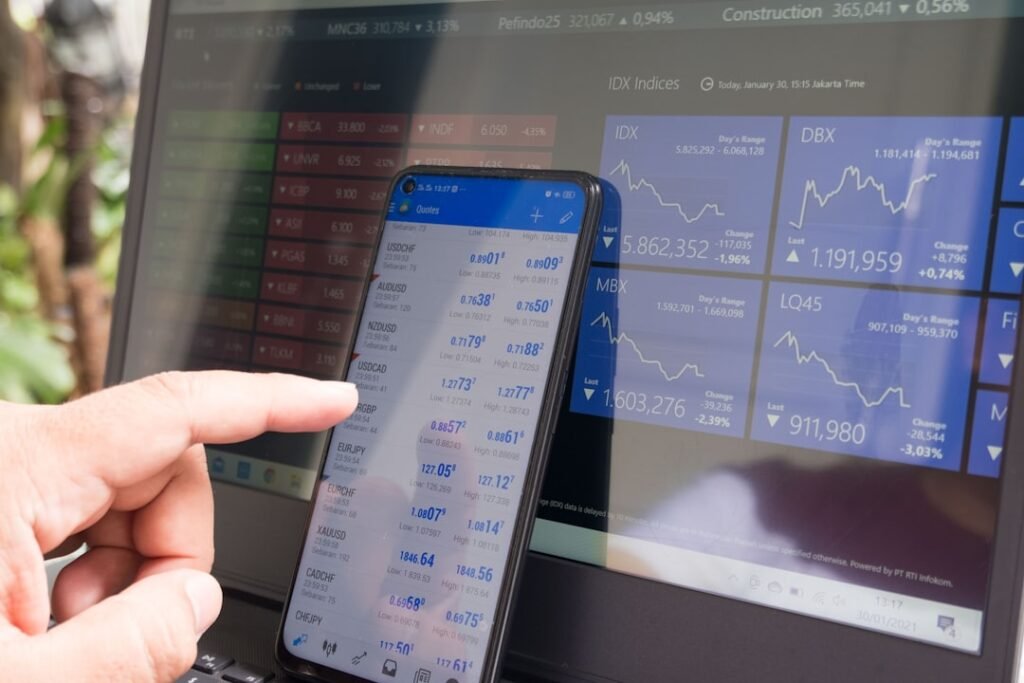
Photo by Marga Santoso on Unsplash