NFP Friday: The Biggest Macro Day of the Month
October 2, 2026 is the kind of trading day that demands full attention — or, for many retail traders, a deliberate decision to step back and let the dust settle. The U.S. Bureau of Labor Statistics releases its Employment Situation report for September at 12:30 PM UTC, and the Eurozone drops its Flash CPI estimate for September at 9:00 AM UTC. Both releases carry the potential to reprice rate expectations and move major pairs by a significant margin in very short order. This is not financial advice — it is market analysis designed to help you understand the landscape before you decide whether and how to trade today.
HIGH-IMPACT EVENT: US Non-Farm Payrolls, Average Hourly Earnings & Unemployment Rate (12:30 PM UTC)
What the Consensus Expects
The market consensus, as compiled by sources including the Bureau of Labor Statistics and tracked by Investing.com, has the September Non-Farm Payrolls (NFP) print forecast at 89,000 — a sharp step down from August’s blockbuster 162,000 gain, which itself far exceeded the prior consensus of 55,000. Average Hourly Earnings (AHE) are expected to hold at 0.3% month-on-month, according to Trading Economics, which would translate to roughly 3.2% year-on-year — a slight uptick from the 3.1% annual pace seen in August. The unemployment rate is forecast to remain steady at 4.1%.
The context matters enormously here. As covered in our recent analysis, the Federal Reserve raised its target range by 25 basis points to 3.75%–4.00% on September 16 — its first increase in over two years — citing resilient domestic demand and continued inflation risks. According to the Fed’s latest dot plot projections, the September 2026 Summary of Economic Projections implied one further quarter-point increase in 2026. As of late September, futures markets tracked by Street Stats Finance were pricing the effective fed funds rate at approximately 4.3% by December, suggesting the market still sees roughly one more hike on the table. Today’s jobs report is a direct input into whether that next hike arrives in October or gets pushed toward December or beyond.
How to Read the Outcome
TIO Markets notes that a strong hiring number paired with rising wages would strengthen the case for an October hike at the October 27–28 FOMC meeting, while clear weakness could push expectations firmly toward December or later. According to ForexFactory, the October meeting is already “up in the air,” making this NFP print unusually consequential for rate pricing. Here is a practical read on the three main scenarios:
- Significant beat (130K+): Dollar broadly bullish. EUR/USD, currently trading near 1.1356 according to MQL5, could sell off toward the 1.1290–1.1300 zone. Gold (XAU/USD), hovering near $4,182 per the Investing.com spot price, would face renewed pressure. October hike odds climb sharply.
- In-line print (80K–110K): Mixed reaction likely. The dollar may hold or drift mildly lower. EUR/USD could see whipsaws without sustained direction. Gold may stabilize. Markets remain in “wait and see” mode for October.
- Significant miss (below 60K): Dollar broadly bearish. EUR/USD could attempt a recovery toward 1.1400+. Gold could rally back toward TIO Markets’ cited resistance near $4,271–$4,305. October hike odds would be slashed, echoing the July episode where a -23,000 print nearly halved hike probability according to Exness research.
Volatility Warning: Spreads, Whipsaws, and the “Fake-Out” Risk
NFP releases routinely produce extreme short-term volatility. Spreads on major pairs typically widen sharply in the seconds around the release, and the initial price spike frequently reverses within minutes as the full report detail — including wage growth and the prior month’s revision — is digested. Trading Economics notes that August’s strong 162K print had a preceding month (July) revised significantly higher to 21,000 from an initial -23,000 reading. Any revision to the August figure today could be just as market-moving as the headline itself.
For retail traders, understanding the difference between market orders, limit orders, and stop orders is especially important during NFP windows — wide spreads can cause market orders to fill at dramatically worse prices than expected, while poorly placed stop-losses can get triggered on the initial spike before price reverses. Many experienced traders prefer to wait for the 5–15 minute post-release candle to close before taking any position, treating the immediate volatility as noise rather than signal. If you are trading around the 12:30 PM UTC release, position sizing and drawdown control are essential — particularly for those using automated strategies.
MEDIUM-IMPACT EVENTS: EUR Core CPI & CPI Flash Estimate y/y (9:00 AM UTC)
What the Consensus Expects
Three hours before the US jobs data drops, Eurostat publishes its Flash CPI estimate for September at 9:00 AM UTC. The headline CPI Flash is forecast to jump to 3.7% year-on-year, up sharply from the 3.3% reading in August — a move largely attributed to energy base effects, according to Orbex analysis published on October 1. The Core CPI Flash — which strips out food and energy — is forecast at 2.5%, a modest uptick from August’s 2.4%. As Trading Economics data confirmed, Eurozone core inflation came in at 2.4% in August, undershooting the consensus of 2.5% at the time.
Why the Core Rate Is the One to Watch
As Orbex analysts noted ahead of today’s release, “what the market is waiting for is the core rate” to determine whether second-round inflation effects are taking hold. The ECB’s own mandate centres on the core trend, not energy-driven headline moves. According to Pound Sterling Live, ING analysts noted that if one central bank hikes in October it is more likely to be the Federal Reserve than the ECB, with markets pricing approximately 17 basis points of Fed tightening in October against only 9 basis points from the ECB. That framing means the EUR side of EUR/USD is less likely to see a dramatic repricing from today’s CPI alone — unless the core reading either significantly beats or misses the 2.5% forecast.
- Core CPI above 2.6%: EUR-bullish, could briefly lift EUR/USD and reduce ECB’s room to stay on hold. Markets may reassess the 9bps of ECB tightening priced in for October.
- Core CPI at 2.4%–2.5% (in-line or modest miss): Limited EUR reaction. Headline energy-driven spike is likely discounted as a base effect by the market. EUR/USD direction then hinges entirely on the 12:30 PM UTC US data.
- Core CPI below 2.3%: EUR-bearish, reinforces ECB caution, could weigh on EUR/USD heading into the US session.
Because both the EUR CPI and the US NFP land on the same day, EUR/USD traders face a double-edged risk. A hot EUR CPI could lift the pair at 9:00 AM UTC, only for a strong NFP to reverse those gains by early afternoon. Traders watching key support and resistance levels on EUR/USD should note that the pair has been trending lower throughout September, dropping from around 1.1650 to near 1.1340, as TIO Markets’ technical analysis highlighted. The 1.1300 zone is an important support area to monitor if USD strength builds post-NFP.
LOW-IMPACT EVENTS: USD Factory Orders & FOMC Member Logan Speaks (2:00 PM UTC)
Following the NFP release, USD Factory Orders for August (forecast +0.1%, previous +0.9%) are due at 2:00 PM UTC alongside remarks from FOMC Member Lorie Logan. On a normal day, Factory Orders would carry modest market-moving potential, but on an NFP Friday the market’s focus will already be fully consumed by the labour data. Logan’s speech carries the usual caveat: if she speaks more hawkishly than the September dot plot implies, it could add a secondary dollar-bullish push in the afternoon; a more cautious tone could provide some relief to beaten-down risk assets. Given that the October FOMC meeting is just 26 days away, any on-the-record FOMC commentary today will be closely scrutinised. German Bundesbank President Nagel is also scheduled to speak at 7:35 PM UTC, but his remarks are unlikely to meaningfully shift EUR/USD after the day’s dominant catalysts have already traded out.
Overall Session Tone: Expect High Volatility in Two Waves
Today is structured as a two-wave volatility day. The first wave arrives at 9:00 AM UTC with the Eurozone Flash CPI, which may set an early directional bias for EUR/USD heading into the London-New York crossover. The second and far more powerful wave hits at 12:30 PM UTC with the NFP triple-header. As seen with last Tuesday’s US Core PCE release, softer-than-expected US inflation data can produce sharp but short-lived dollar weakness before buyers return. Today’s NFP, however, operates on a much larger scale — with a forecast showing a near-halving of job creation from the prior month, the range of surprises (and the corresponding currency moves) is unusually wide.
Traders who prefer lower-volatility setups may find it prudent to sit on the sidelines between 12:15 PM and 12:45 PM UTC and return once a clear post-NFP trend has established itself on the 15-minute or 1-hour chart. Those using automated systems should review their exposure settings before the release — particularly scalping tools that rely on tight spreads and may not account for the extreme spike conditions typical of NFP Friday.
This article is for informational and educational purposes only and does not constitute financial or investment advice. Always conduct your own analysis before making any trading decisions.
For traders who want deeper analytical tools to navigate days like this, MGH Products offers a range of MetaTrader indicators and Expert Advisors at mghfx.com — built to help you identify high-probability setups and manage risk in fast-moving markets.
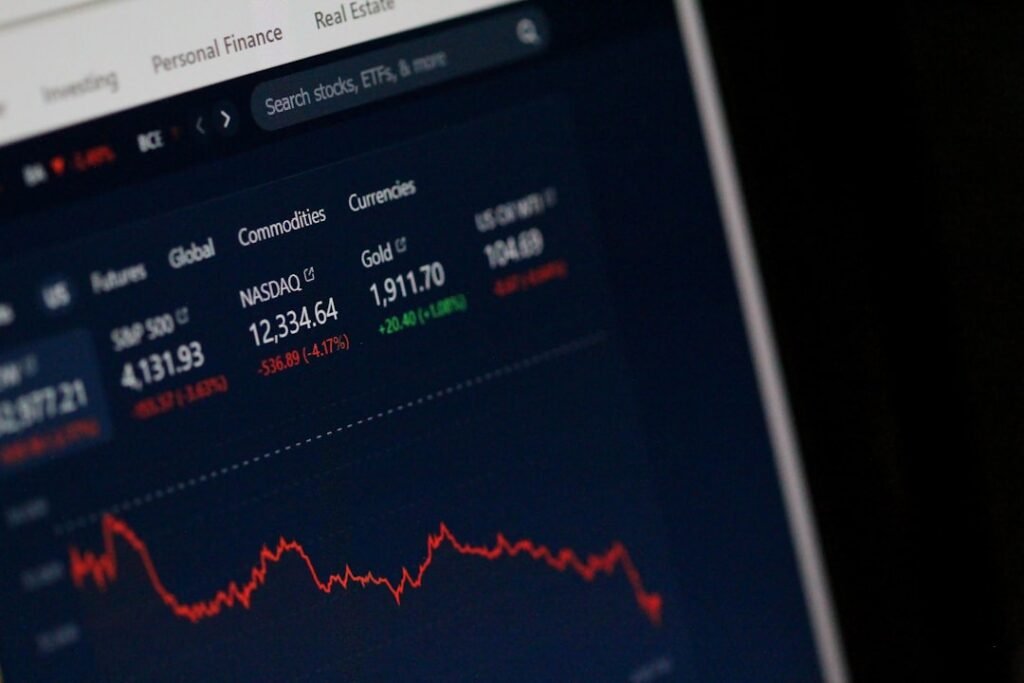
Photo by Tötös Ádám on Unsplash