Two Schools of Thought, One Market
Every forex trader eventually faces a foundational question: should you base your trading decisions on charts and price patterns, or on economic data and global events? This is the core debate between technical analysis and fundamental analysis. Neither approach has a monopoly on success — both have produced consistent traders, and both have their blind spots. Understanding how each works, and where they intersect, gives you a far more complete picture of the forex market.
What Is Technical Analysis?
Technical analysis is the study of historical price data — primarily through charts — to forecast future price movement. The underlying assumption is that all known information about a currency pair is already reflected in its price. Therefore, by studying price patterns, trends, and momentum, a trader can identify high-probability setups without needing to know why the market moved.
Core Tools of Technical Analysis
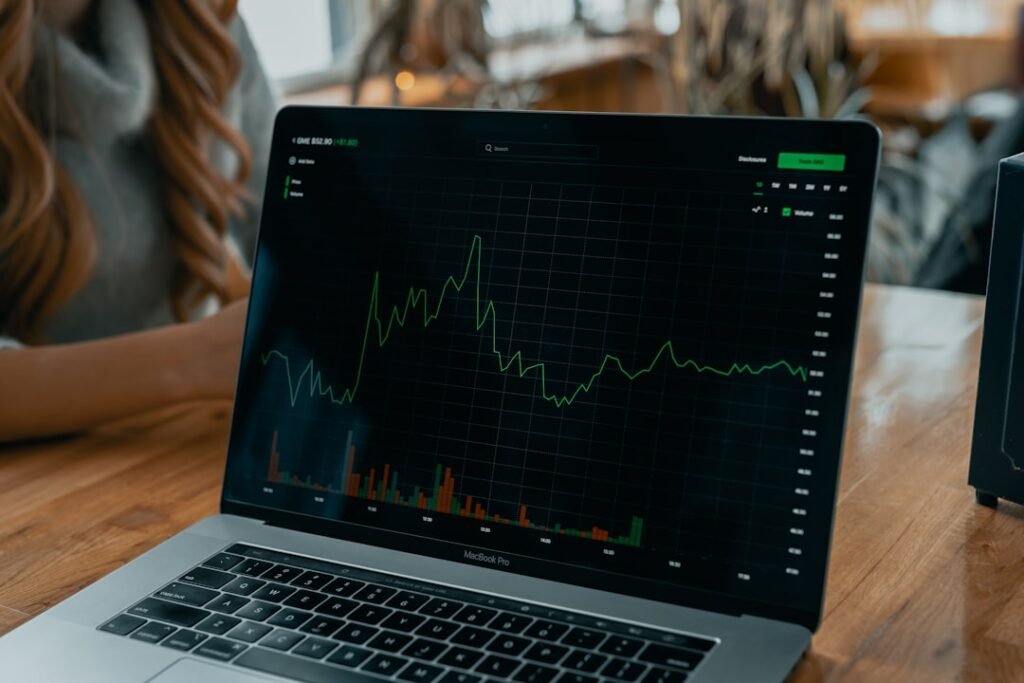
- Price charts: Candlestick, bar, and line charts display how price has behaved over time. Candlestick patterns in particular reveal market sentiment at a glance.
- Support and resistance: Price levels where buying or selling pressure has historically been strong. These zones help traders identify potential turning points.
- Indicators and oscillators: Tools like moving averages, RSI, MACD, and Bollinger Bands help quantify trend direction, momentum, and volatility.
- Chart patterns: Formations such as head and shoulders, double tops, flags, and triangles suggest probable future price behavior based on historical precedent.
The main strength of technical analysis is its precision. It gives traders defined entry points, stop-loss levels, and profit targets. It works across all timeframes, from one-minute scalping charts to weekly swing-trading views, and it applies equally to any currency pair.
Its limitation is context. A perfectly formed bullish chart pattern can be invalidated in seconds by an unexpected central bank announcement. Technical analysis tells you what the price is doing — it rarely tells you why, or when an external shock might override the pattern entirely.
What Is Fundamental Analysis?
Fundamental analysis focuses on the underlying economic, political, and monetary forces that drive currency values over time. Rather than reading a chart, a fundamentalist reads economic reports, central bank statements, and geopolitical developments to determine whether a currency should logically appreciate or depreciate.
Key Drivers in Forex Fundamentals
- Interest rates: Central banks set interest rates that directly influence capital flows. Higher rates tend to attract foreign investment, strengthening a currency. This is one of the most powerful long-term drivers in forex.
- Economic data releases: Reports such as GDP growth, employment figures, inflation data (CPI), and trade balances reveal the health of an economy. Strong data generally supports a stronger currency.
- Central bank policy and forward guidance: Beyond current rates, the tone and language used by central banks — hawkish (leaning toward rate hikes) or dovish (leaning toward cuts) — can move markets dramatically.
- Political stability and risk sentiment: Elections, geopolitical tensions, and global risk appetite all influence how traders allocate capital across currencies.
Fundamental analysis excels at explaining the big picture and identifying longer-term trends. If you understand that one country is tightening monetary policy while another is cutting rates, you have a logical basis for a medium-to-long-term directional bias on that currency pair.
Its weakness lies in timing. Knowing that a currency is fundamentally overvalued or undervalued does not tell you when the market will correct. A currency can remain mispriced for months or even years, and holding a position through that period requires deep pockets and considerable patience. Fundamentals also require continuous research and interpretation — two traders can read the same jobs report and reach opposite conclusions.
How to Combine Both Approaches
The most practical framework for most retail forex traders is to use fundamental analysis to establish a directional bias and technical analysis to time entries and manage risk. These two methods are not competitors — they are complementary layers of the same decision-making process.
Here is a simplified example of how this works in practice: Suppose economic data and central bank commentary suggest that a particular currency is gaining strength relative to another — this is your fundamental thesis. Rather than entering the trade blindly, you then move to a chart and look for a technical setup that aligns with that bias: perhaps price has pulled back to a key support level and a momentum indicator is signaling a potential reversal. The confluence of a sound fundamental reason and a clean technical trigger often produces higher-quality trade setups than either method alone.
A few practical principles for combining both:
- Use fundamentals to determine the trend direction on higher timeframes; use technicals to find precise entries on lower timeframes.
- Be aware of scheduled high-impact news events (central bank meetings, major data releases) and avoid entering new technical positions immediately before them — fundamentals can override any chart pattern instantly.
- If your technical and fundamental signals conflict, reduce position size or step aside. Alignment between both methods is the strongest confirmation you can have.
Traders who use MetaTrader platforms may find it easier to apply technical setups consistently with purpose-built indicators and tools. MGH Products at mghfx.com offers a range of MetaTrader indicators and Expert Advisors designed to support structured, rules-based technical analysis — a useful complement to your own fundamental research.
Finding Your Edge
There is no universal answer to which approach is superior. Short-term traders and scalpers often lean heavily on technical analysis because fundamentals play out over days or weeks, not minutes. Longer-term position traders and macro traders tend to root their decisions in fundamentals, using charts only to fine-tune execution. Understanding both gives you flexibility and depth — you can adapt your approach to different market conditions rather than being locked into a single lens.
The goal is not to master one school and dismiss the other, but to build a coherent trading framework where each method reinforces the other. Price action confirms the economic story; the economic story gives context to the price action. Together, they give a more complete and defensible rationale for every trade you consider.
Disclaimer: This article is for educational purposes only and does not constitute financial or investment advice. Forex trading carries significant risk. Always conduct your own research and consider your financial situation before making any trading decisions.
Photo by Tech Daily on Unsplash