What Is Market Sentiment?
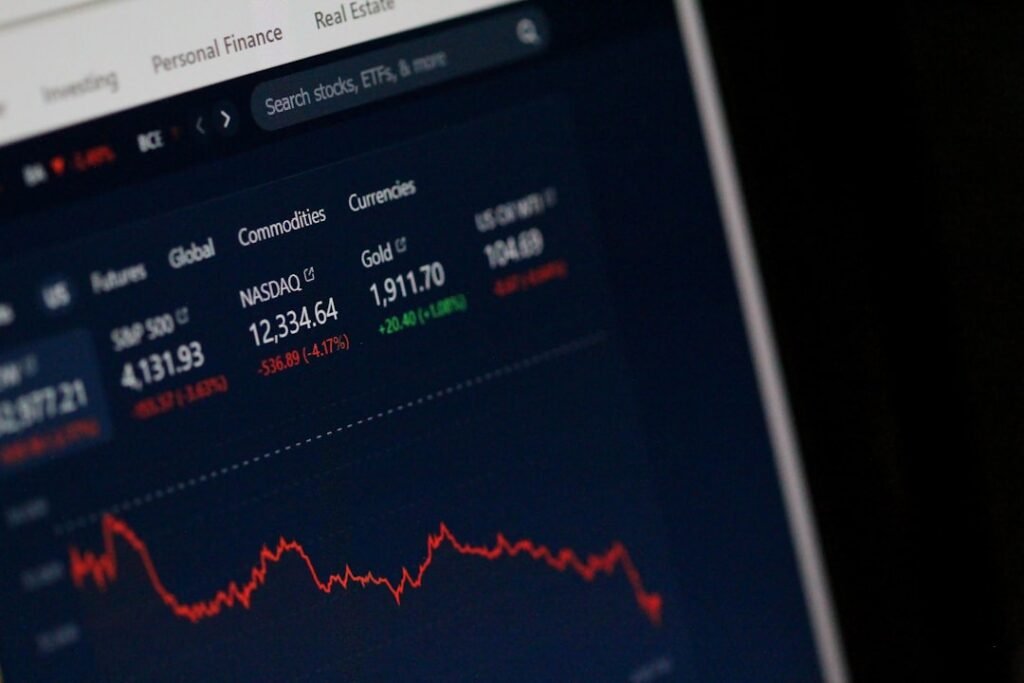
Every price movement in the forex market is ultimately driven by people making decisions — to buy, to sell, to hold, or to wait. The collective attitude behind all of those decisions is what traders call market sentiment. Put simply, market sentiment is the overall mood or psychological tone of market participants at any given time.
Sentiment can be broadly described as bullish (optimistic, expecting prices to rise) or bearish (pessimistic, expecting prices to fall). When the majority of traders are bullish on a currency pair, buying pressure tends to push prices higher. When sentiment turns bearish, selling pressure dominates and prices decline. Understanding this dynamic is a fundamental skill for any serious forex trader.
Importantly, market sentiment is not always aligned with economic fundamentals. A currency can be fundamentally strong yet still fall if sentiment turns negative — and vice versa. That gap between fundamentals and sentiment is often where the most interesting trading opportunities emerge.
How to Measure Market Sentiment
Unlike price or volume, sentiment is not printed directly on a chart. Traders must infer it from a variety of tools and data sources. Here are the most widely used approaches:
1. Commitment of Traders (COT) Report
Published weekly by the U.S. Commodity Futures Trading Commission (CFTC), the COT report shows the net long and short positions held by different categories of traders — including commercial hedgers, large speculators, and small speculators — in futures markets. Forex traders use this data to gauge what large institutional players (often called “smart money”) are positioned to do. When large speculators are heavily net-long a currency, it may signal strong bullish sentiment — but it can also signal that the market is overstretched and due for a reversal.
2. Retail Sentiment Indicators
Many brokers and data providers publish real-time data showing the percentage of their retail clients who are long versus short on a given currency pair. Interestingly, retail traders as a group tend to be contrarian indicators — when an overwhelming majority of retail traders are long, price often continues to fall, and vice versa. This is not a hard rule, but it is a pattern worth tracking.
3. News Flow and Risk Appetite
Sentiment is heavily influenced by macroeconomic news, geopolitical events, and central bank communications. Phrases like “risk-on” and “risk-off” describe two broad sentiment states in global markets. In a risk-on environment, investors are confident and tend to buy higher-yielding, growth-linked currencies. In a risk-off environment, fear dominates and money flows into safe-haven assets like the Japanese yen or the Swiss franc. Monitoring news flow gives traders an early read on which mood is taking hold.
4. Technical Sentiment Signals
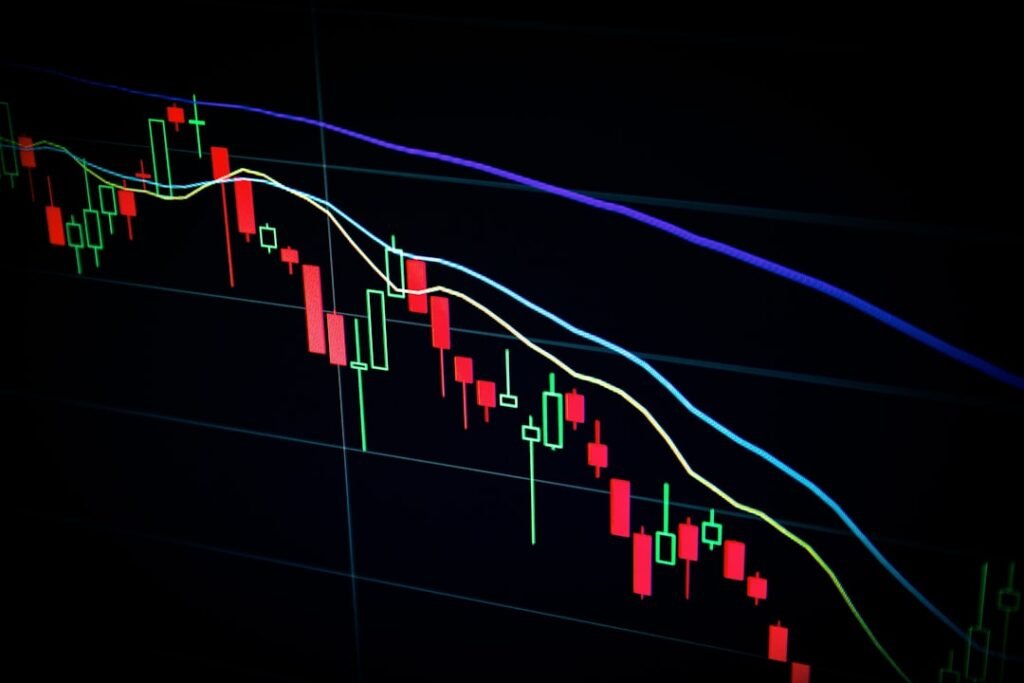
Price action itself encodes sentiment. Candlestick patterns, support and resistance levels, and momentum indicators all reflect the push and pull between buyers and sellers. For example, a series of higher highs and higher lows signals bullish sentiment embedded in price structure. Oscillators like the Relative Strength Index (RSI) or the Stochastic can help identify when sentiment has become extreme — conditions sometimes referred to as overbought or oversold.
How to Trade Market Sentiment
There are two broad approaches to trading sentiment: following it and fading it. Understanding when to apply each is what separates disciplined traders from reactive ones.
Trading With the Sentiment (Trend Following)
When sentiment is clearly and consistently bullish or bearish, trend-following strategies tend to perform well. The idea is straightforward: align your trades with the dominant mood of the market. If institutional positioning, news flow, and price structure all point in the same direction, the probability of that trend continuing is meaningfully higher than when signals are mixed.
For example, if the COT report shows large speculators increasingly net-long on a currency, retail sentiment is also bullish, and the price is making higher highs on the daily chart, a trader using a trend-following approach would look for pullback entries in the direction of that prevailing sentiment.
Trading Against the Sentiment (Contrarian Approach)
Sentiment extremes — when almost everyone is positioned on the same side of a trade — can signal that a reversal is near. Markets tend to move to punish the most crowded positions. A contrarian trader watches for moments when sentiment has become one-sided to the point of excess, then waits for a technical trigger (such as a key level rejection or a momentum divergence) before entering a counter-trend trade.
This approach requires patience and discipline. Sentiment can remain extreme for longer than expected, so contrarian traders typically use tight risk management and look for confirming signals rather than simply “picking tops and bottoms” blindly.
Combining Sentiment With Other Analysis
The most robust trading decisions come from combining sentiment analysis with technical and fundamental analysis. No single tool is sufficient on its own. A trader who sees bearish fundamentals, overly bullish retail positioning, and a technical breakdown of a key support level has three converging reasons to consider a bearish trade — a far stronger case than any one signal alone.
Common Mistakes When Trading Sentiment
- Treating sentiment as a timing tool alone. Sentiment tells you the mood; it does not tell you exactly when the mood will shift. Always wait for price confirmation before acting.
- Ignoring the trend. Fading sentiment is high-risk when the underlying trend is strong. Contrarian trades work best near exhaustion, not in the middle of a trend.
- Over-relying on retail positioning data. Retail sentiment indicators are useful as one input, not as a standalone strategy. Context matters enormously.
- Confusing short-term and long-term sentiment. Sentiment on a 15-minute chart is very different from sentiment on a weekly chart. Be clear about your trading timeframe.
Putting It All Together
Market sentiment is one of the most powerful — and most overlooked — forces in forex trading. By learning to read the collective mood of market participants through COT data, retail positioning, news flow, and technical price structure, traders gain an edge that pure chart-reading or fundamental analysis alone cannot provide.
If you are looking to systematize your sentiment and technical analysis process, MGH Products offers a range of MetaTrader indicators and Expert Advisors at mghfx.com designed to help traders identify momentum shifts, trend conditions, and key market levels — all of which feed directly into a sentiment-aware trading approach.
Developing a feel for market sentiment takes time and consistent observation. Start by following one or two sentiment tools alongside your regular analysis, and gradually build an intuition for how mood and price interact. Over time, this layer of awareness will make you a more complete and confident trader.
Disclaimer: This article is intended for educational purposes only and does not constitute financial advice. Trading forex involves significant risk, and you should carefully consider your objectives, experience, and risk tolerance before trading.
Photo by Kanchanara on Unsplash