Why Employment Data Matters in Forex
Of all the economic releases that hit the calendar each month, employment data consistently ranks among the most market-moving. Currency pairs can shift dozens — sometimes hundreds — of pips within seconds of a major jobs report. Understanding why this happens is not just academic; it is a foundational skill for any trader who wants to navigate the forex market with confidence.
The core reason is straightforward: employment is a direct proxy for the health of an economy. When people are working, they earn income, spend money, and fuel growth. Central banks — the institutions that control interest rates — watch employment figures closely when making policy decisions. Since interest rate differentials drive long-term currency valuations, anything that shifts rate expectations will move exchange rates.
Key Employment Reports Traders Watch
Different countries publish their own labour market data on different schedules, but a handful of reports carry outsized influence in the forex market.
Non-Farm Payrolls (NFP) — United States
The US Non-Farm Payrolls report, released by the Bureau of Labor Statistics on the first Friday of each month, is arguably the single most-watched economic release in the world. It measures the net change in employed persons across most business sectors. The USD is involved in roughly 88% of all forex transactions, so a surprise in NFP data reverberates across nearly every major and minor currency pair.
A reading significantly above consensus expectations typically strengthens the US Dollar, because strong job growth suggests the Federal Reserve may keep rates higher or raise them further. A reading well below expectations tends to weaken the Dollar, as it raises the prospect of rate cuts or a more accommodative policy stance.
Unemployment Rate
Published alongside or separately from payrolls data depending on the country, the unemployment rate expresses the percentage of the labour force actively seeking work but not employed. A declining unemployment rate is generally bullish for a currency; a rising rate is bearish. However, the headline number alone can mislead — traders also examine why it changed. An unemployment rate that falls because discouraged workers stopped looking for jobs is far less bullish than one that falls because hiring surged.
Other Important Labour Reports
- ADP Employment Report (US): A private-sector estimate released a few days before NFP. Often used as a preview, though it does not always align with the official figure.
- Claimant Count / Jobless Claims: Weekly or monthly data showing how many people filed new unemployment benefit claims. Useful for spotting trends between larger monthly releases.
- Employment Change (Australia, Canada, Eurozone): Each major economy publishes its own version of net job creation data, all capable of producing sharp moves in AUD, CAD, and EUR pairs respectively.
- Average Hourly Earnings / Wage Growth: Often published alongside payrolls, wage data matters because rising wages signal potential inflation — another key input for central bank decisions.
How the Market Reacts: Expectation vs. Reality
A critical concept for any trader studying employment releases is that markets price in expectations before data is published. Professional traders, economists, and financial institutions collectively form a consensus forecast. The market’s reaction to the actual release depends almost entirely on the gap between that forecast and the real number.
Consider a simplified example: if analysts expect 200,000 new jobs to be created and the actual figure comes in at 320,000, the Dollar is likely to surge — not because 320,000 is a good number in isolation, but because it was 120,000 above what the market had already priced in. Conversely, a reading of 180,000 might cause the Dollar to fall, even though 180,000 new jobs sounds positive in everyday terms. The market is always trading the surprise, not the absolute number.
This dynamic explains why you can sometimes see a currency fall on seemingly good data, or rally on seemingly bad data. Look for the relationship between the actual print, the forecast, and the previous reading — all three together tell a more complete story.
Immediate vs. Sustained Reactions
The first few seconds after a major release are often chaotic. Algorithms execute trades in milliseconds, spreads widen sharply, and price can spike in one direction before reversing. This initial volatility is the market digesting the headline number. The more sustained move — which may develop over minutes or hours — reflects deeper analysis: traders absorbing wage figures, revisions to prior months, participation rates, and what the data implies for the next central bank meeting.
Traders who focus only on the headline number and jump into trades immediately often get caught in false moves. Waiting for the initial spike to settle and watching where price stabilises can offer a clearer read of the market’s true conviction.
Practical Tips for Trading Around Employment Releases
- Know the release time in advance. Mark your economic calendar well before the event so you are not caught off guard by sudden volatility.
- Widen your perspective beyond the headline. Read the full report if possible — revisions to previous months can sometimes move the market as much as the current month’s data.
- Manage risk explicitly. Spreads widen dramatically during major releases. Position sizing and stop-loss placement must account for much larger-than-normal price swings.
- Understand cross-currency effects. A strong NFP does not only move EUR/USD — it affects USD/JPY, GBP/USD, AUD/USD, and USD/CAD simultaneously. Consider which pair offers the cleanest expression of your view.
- Watch the revision number. If last month’s figure is revised sharply upward or downward, the market often reacts to the revision almost as much as the new data.
Traders looking to systematise their approach to high-impact events may find value in purpose-built tools. The MetaTrader indicators and Expert Advisors available at mghfx.com can help automate monitoring and risk management around volatile news periods, reducing the emotional pressure that often leads to poor decisions.
Putting It All Together
Employment data moves currency pairs because it directly informs expectations about monetary policy, economic strength, and future interest rate differentials. The key to reading these releases is not just knowing whether a number is good or bad, but understanding how it compares to what the market already expected — and what it implies for central bank behaviour going forward. Combining a solid grasp of labour market fundamentals with disciplined risk management gives traders a meaningful edge when navigating some of the most volatile moments on the forex calendar.
Disclaimer: This article is for educational purposes only and does not constitute financial or investment advice. Trading forex carries significant risk. Always conduct your own research and consult a qualified financial professional before making trading decisions.
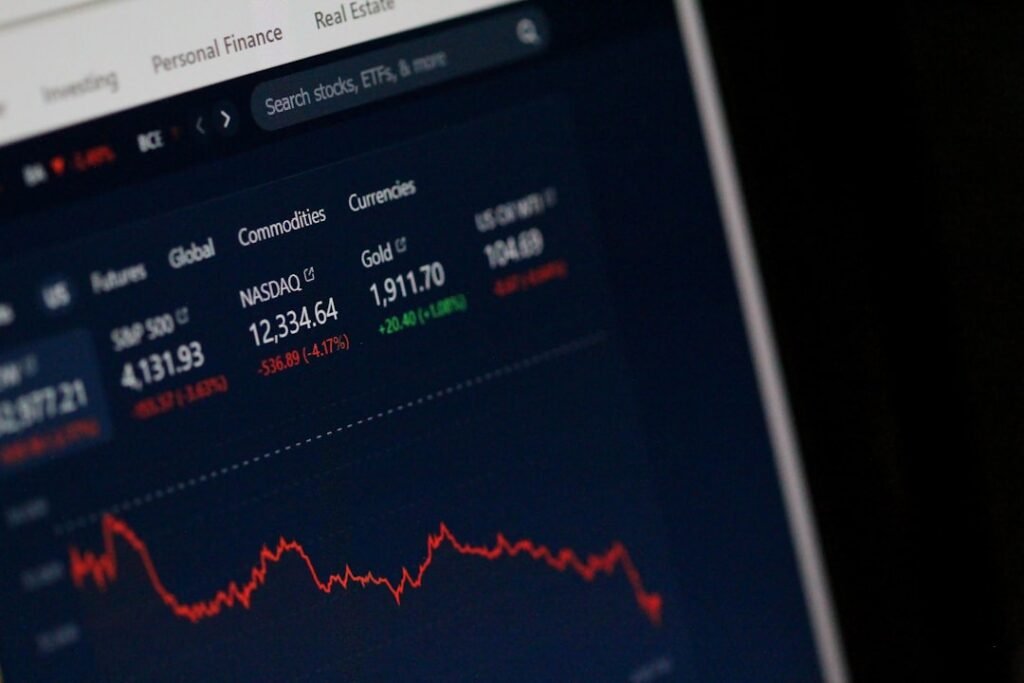
Photo by Ibrahim Boran on Unsplash