Forex Market Overview: August 19, 2026
Wednesday, August 19 is shaping up as the most consequential trading session of the week, with the Federal Reserve’s FOMC minutes from the July 28–29 meeting due at 2:00 PM ET. Markets are navigating a complex backdrop: gold is staging its strongest monthly recovery since the outbreak of the US-Israel-Iran conflict, the Japanese yen remains under structural pressure despite growing Bank of Japan hike expectations, and the euro is consolidating ahead of what could be a policy-clarifying event. Traders looking for context from yesterday’s session can review the Forex Market Analysis: August 18, 2026.
Key Market-Moving Events Today
FOMC Minutes: The Week’s Central Event
According to a report by Interactive Crypto, the Federal Reserve’s FOMC minutes from the July 28–29 meeting are scheduled for release at 2:00 PM ET on August 19, 2026, making them the most significant market catalyst this week. At that meeting, the Fed voted 9–3 to hold the federal funds rate target range steady at 3.50%–3.75%. However, as the Kraken Blog reported, three regional Fed presidents — Hammack, Kashkari, and Logan — formed a unified bloc calling for an immediate quarter-point hike, marking the first three-way same-direction dissent since September 2016.
The minutes will be scrutinised for evidence of how close that dissenting view came to swaying the broader committee. As the Kraken Blog noted, if the minutes reveal broader latent support for a hike, traders may raise the odds of a more hawkish path heading into the September 15–16 FOMC meeting. Conversely, if the dissent appears narrow and isolated, markets may treat a hold as the base case through year-end. According to the Federal Reserve’s own June 2026 Summary of Economic Projections, as reported by Forbes, nine of the 18 FOMC officials had already pencilled in at least one rate hike for 2026, while the PCE inflation forecast for the year stood at 3.6%.
The July CPI, released earlier this month, showed a year-over-year inflation rate of 3.4%, per Interactive Crypto’s reporting — a slight decline, but still well above the Fed’s 2% target. Meanwhile, the July nonfarm payrolls report showed a net job loss of 23,000 against a forecast gain of roughly 83,000, according to the Kraken Blog, adding to the mixed economic signals the FOMC minutes will need to address. Understanding how combining technical and fundamental analysis helps traders navigate events like FOMC releases is key to building a well-rounded strategy.
Jackson Hole on the Horizon
Beyond today’s minutes, markets are already positioning ahead of the Jackson Hole Economic Policy Symposium, scheduled for August 27–29, 2026. According to Regards of Wall Street, it will feature the first keynote speech from new Fed Chair Kevin Warsh, on Friday, August 28. With the September FOMC decision just 19 days after the symposium closes, Warsh’s comments will be parsed intensely for any signal on whether the current hiking cycle is finished or merely paused. According to Finance Calendar, any divergent signals between the Fed, ECB, Bank of England, and Bank of Japan at the event can generate significant moves in currency markets and cross-border capital flows.
Empire State Manufacturing Beats Expectations
On Monday, August 17, the NY Fed’s Empire State Manufacturing Survey came in at 20.6 for August, well above the consensus estimate of 11.0 and marking the strongest reading in more than four years, according to Forex Factory. New York Fed economic research advisor Richard Deitz noted that “New York State manufacturing activity increased at its fastest pace in over four years in August,” per Investing Live’s report. New orders held solid at 17.3 and shipments rose to 11.7, though delivery times lengthened and supply availability worsened. Per Investing.com, the strong reading was broadly viewed as bullish for the US dollar, reflecting underlying economic resilience even as the broader growth picture has softened.
Technical Outlook: Major Pairs
EUR/USD – Consolidating Below Key Resistance
EUR/USD slipped to 1.1574 in Tuesday’s session, according to RoboForex’s daily analysis, as shifting Federal Reserve rate expectations continued to favour the dollar at the margin. According to RoboForex’s weekly technical analysis for the August 17–21 period, the pair faces key resistance at 1.1554 and then 1.1670, while support levels are seen at 1.1494 and 1.1429. The pair has retreated significantly from its 2026 high of 1.1915, and RoboForex’s weekly report noted that the active trading scenario has shifted from bullish to bearish below both EMA65 and EMA200.
The fundamental backdrop remains nuanced. According to RoboForex, the ECB has raised its benchmark rate to 2.40% while the Fed holds at 3.50%–3.75%, and US inflation at 3.4% continues to outpace the eurozone’s 2.8% — a differential that could sustain dollar demand if the FOMC minutes lean hawkish. Traders monitoring EUR/USD should pay close attention to the 1.1494 support level as a first line of defence; a break below 1.1429 would open the door to further losses. Tools like the MACD indicator can help traders confirm momentum shifts at these key structural levels.
XAU/USD – Gold’s August Rebound Faces a Test
Gold (XAUUSD) is trading around $4,397 per ounce on August 19, according to Investing.com’s historical data, with today’s session range spanning $4,386 to $4,436. According to Reuters, bullion has rebounded approximately 9% in August to around $4,400 — a recovery that suggests it is starting to regain favour with institutional investors and central banks after the shock of the US-Israeli conflict with Iran drove prices from an all-time high of $5,595 per ounce in January 2026 to below $4,000 in June.
According to IG UK, gold has been supported by reduced expectations of a Federal Reserve rate hike in September, a softer dollar, continued central bank buying, and periodic safe-haven demand tied to the ongoing Strait of Hormuz crisis, which began in February 2026. According to Reuters, the strength of the recent rebound suggests institutional and possibly sovereign wealth fund activity, with Asian trading hubs also showing renewed buying interest. LiteFinance’s forecast projects XAU/USD to continue consolidating within the $4,313–$4,441 range on August 19, with the estimated pivot point at $4,170. According to RoboForex’s weekly levels, resistance sits at $4,449 and then $4,666, while support is found at $4,334 and $4,263. Traders interested in the relationship between commodity prices and currency markets may find the article on how commodity prices affect currency pairs a useful reference.
USD/JPY – Caught Between Two Central Banks
USD/JPY is trading near 159.60, according to Trading Economics’ August 18 data, as the pair remains pulled in opposite directions by the Federal Reserve’s hawkish dissent and growing expectations of a Bank of Japan rate hike. According to Bloomberg, Prime Minister Sanae Takaichi’s government has expressed support for a near-term BoJ rate increase, with the next move likely in either September or October. The BoJ held its policy rate at 1.00% in its July 31 meeting, following a 25-basis-point hike in June, but flagged that upside inflation risks could justify another hike as early as September, per Trading Economics.
The yen has retraced roughly half of the gains it made during late July and early August, when Tokyo and Washington conducted record joint currency intervention, according to Trading Economics. The currency remains structurally pressured by a wide interest rate differential — Japan’s 1.00% policy rate against the US’s 3.50%–3.75% band — as noted by OMFIF. According to RoboForex’s weekly technical levels, USDJPY faces resistance at 160.55 and 161.90, with support at 158.58 and then 155.22. A hawkish FOMC minutes release could push the pair toward the upper resistance, while any renewed BoJ hike signals may trigger a reversal toward the lower end. Traders following this pair may benefit from the Kijun-sen line strategies to identify potential trend shifts.
What to Watch for the Rest of the Week
Beyond today’s FOMC minutes at 2:00 PM ET, traders should monitor any follow-up commentary from Fed officials and the evolving geopolitical situation in the Middle East, where the Strait of Hormuz remains a key variable for both oil prices and gold. The second estimate of Q2 GDP — with the advance reading at 1.5% annualised, down from 2.1% in Q1 per the Kraken Blog — is due August 26, the same day as Nvidia’s earnings. Jackson Hole (August 27–29) then closes out the month with what may be the most market-impactful central bank event of the summer. Understanding market sentiment will be essential for navigating these high-volatility events.
Conclusion
Today’s FOMC minutes release is the linchpin for near-term direction across the major pairs. A hawkish tone — particularly if it reveals broader committee support for a hike beyond the three known dissenters — could strengthen the dollar, press EUR/USD toward its 1.1494 support, push USD/JPY back toward 160.55, and cap gold’s recovery below $4,449. A more neutral tone could support risk appetite and extend gold’s August rebound. Traders should keep position sizes disciplined ahead of what could be a volatile afternoon session.
This article is intended for informational purposes only and does not constitute financial advice. Always conduct your own analysis before making any trading decisions. Traders looking to sharpen their technical edge can explore the MetaTrader indicators and expert advisors available at mghfx.com.
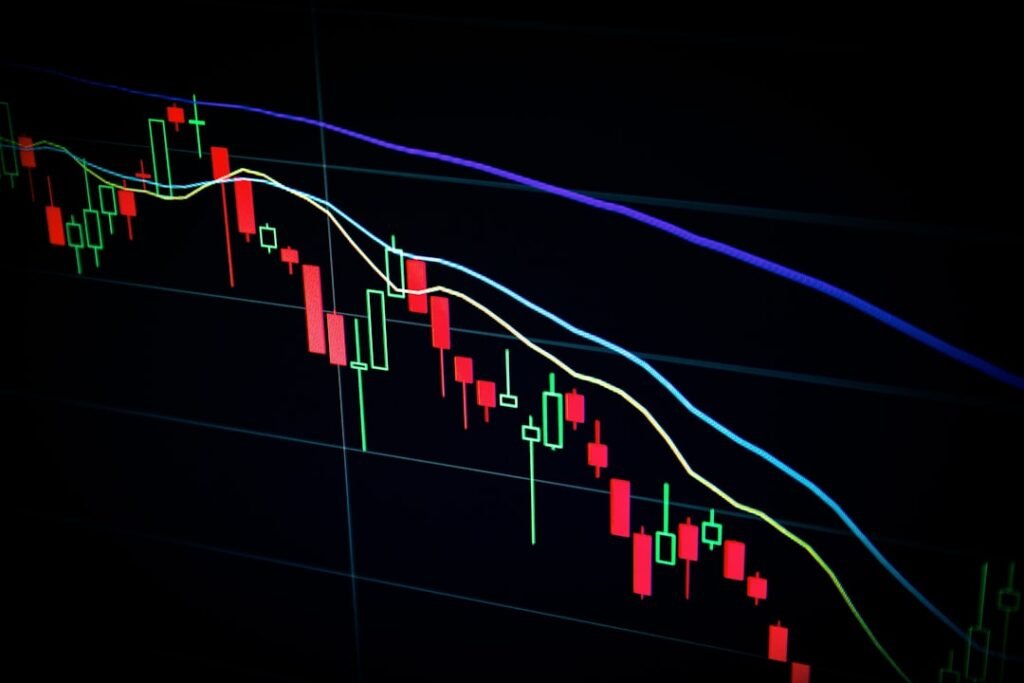
Photo by Arturo Añez on Unsplash