What Is Grid Trading?
Grid trading is a systematic forex strategy where a trader places a series of buy and sell orders at predetermined price intervals — forming a “grid” of orders above and below a starting price. Rather than trying to predict which direction the market will move, the strategy profits from price oscillation itself. Every time the market moves a set number of pips in either direction, an order is triggered, a profit target is hit, and the cycle repeats.
The core logic is straightforward: markets rarely move in a straight line. They zig-zag, retrace, and consolidate. A grid is designed to capture that noise — turning volatility into a mechanical source of profit without requiring a directional forecast.
This makes grid trading particularly appealing to traders who want a rule-based, emotion-free approach, and it is one of the most popular strategies to automate with Expert Advisors (EAs) in MetaTrader.
How a Grid Works: The Mechanics
Classic (Non-Directional) Grid
In the classic setup, a trader defines a price range and an interval — say, every 20 pips. Buy limit orders are placed below the current price, and sell limit orders are placed above it. Each order has a fixed take-profit equal to the grid interval. There is typically no stop-loss on individual positions; instead, risk is managed at the account level.
Example: EUR/USD is at 1.0800. A trader sets a 20-pip grid from 1.0700 to 1.0900 with buy limits at 1.0780, 1.0760, 1.0740… and sell limits at 1.0820, 1.0840, 1.0860… As price oscillates within this range, orders fill and close at profit repeatedly.
This approach works best in ranging, mean-reverting conditions where price stays within a defined band. Identifying strong support and resistance levels to anchor your grid boundaries is a critical first step.
Directional (Trend) Grid
A directional grid is biased toward one side of the market. If a trader believes the market is trending upward, they place only buy stop orders above the current price at regular intervals. Each order triggers as price pushes higher, stacking profitable positions in the direction of the trend.
This version functions more like a trend-following pyramid and carries more risk in a sudden reversal, but it can generate substantial returns in sustained trending environments. Using multiple timeframe analysis to confirm the prevailing trend direction before deploying a directional grid significantly improves the odds.
When Grid Trading Works — and When It Doesn’t
Ideal Conditions
- Low-volatility, ranging markets: When price oscillates within a predictable band, a classic grid collects small wins repeatedly with mechanical efficiency.
- High-liquidity pairs: Major pairs like EUR/USD, GBP/USD, and USD/JPY tend to have tighter spreads, making smaller grid intervals viable without spread costs eating all profit.
- Consolidation phases: Price often consolidates before and after major news events. A well-placed grid can harvest that chop efficiently.
When to Be Cautious
- Strong trending markets: A classic (non-directional) grid is brutally punished by sustained trends. As price moves in one direction without reversing, open positions accumulate and drawdown can grow rapidly.
- High-impact news events: Sudden price gaps triggered by major economic releases can skip over multiple grid levels, opening a cluster of losing trades simultaneously. Many experienced grid traders pause their grids around scheduled news.
- Illiquid or exotic pairs: Wide spreads can render a grid unprofitable at the individual trade level, making the entire strategy unviable.
Risk Management: The Most Critical Part
Grid trading’s greatest danger is also its defining characteristic: it uses no stop-loss on individual trades. Positions are held open and hedged against each other. In a strong trend, losing positions can accumulate to account-threatening levels before the market reverses — if it reverses at all.
Experienced grid traders manage this with several rules:
- Equity stop-loss: Define a maximum drawdown level in dollar or percentage terms — for example, if the account loses 20% in open floating drawdown, all positions close automatically. This is non-negotiable.
- Grid boundaries: Set hard outer limits on the grid. If price breaks outside the defined range, close all open positions and reassess rather than extending the grid indefinitely.
- Position sizing: Keep individual lot sizes small relative to account size. A grid may open 10–20 positions simultaneously; sizing must account for that full potential exposure, not just one trade at a time. Understanding risk-reward fundamentals helps frame the overall exposure correctly.
- Pair selection: Choose pairs with historically stable ranges for classic grids. Avoid grids on pairs prone to extreme, one-directional moves.
The equity stop is what separates disciplined grid traders from those who blow accounts. Treat it as sacred.
Automating Your Grid with EAs
Grid trading is inherently rules-based, which makes it one of the most automation-friendly strategies in forex. An Expert Advisor can monitor price, place orders, manage take-profits, track grid boundaries, and enforce equity stops without human intervention — 24 hours a day, five days a week.
If you’re interested in applying a structured grid approach to your MetaTrader account, MGH Products offers a range of indicators and EAs at mghfx.com designed to help traders implement systematic strategies like this one with precision and consistency.
Final Thoughts
Grid trading is a powerful, logic-driven strategy that can generate steady returns in the right market conditions — particularly ranging or low-trend environments. Its strength lies in its mechanical simplicity and its ability to profit without a directional bias. Its weakness, however, is equally significant: without disciplined risk management and firm equity stops, a sustained trend can cause catastrophic drawdown.
Approach grid trading with the same rigour you’d apply to any professional strategy: backtest thoroughly, size positions conservatively, and always define your maximum tolerable loss before you place the first order.
This article is for educational purposes only and does not constitute financial or investment advice. Trading forex carries significant risk and is not suitable for all investors.
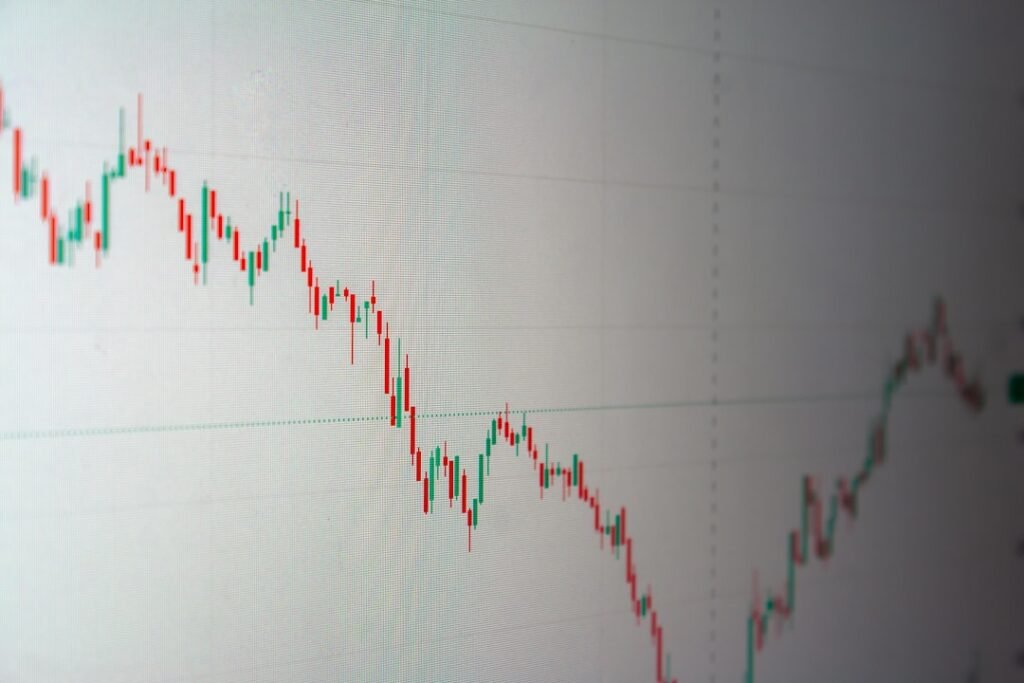
Photo by Jakub Żerdzicki on Unsplash