Understanding the Two Worlds of Technical Indicators
When traders open MetaTrader for the first time, they find a familiar toolkit waiting for them: moving averages, RSI, MACD, Bollinger Bands. These are the built-in indicators — pre-installed, universally recognized, and ready to use. But as traders gain experience, many discover a second layer: custom indicators, built to go beyond what the standard library offers. Understanding the difference between these two categories is more than a technical detail — it shapes how you analyze the market and ultimately how you trade.
What Are Built-In Indicators?
Built-in indicators, sometimes called native or standard indicators, come packaged with your trading platform. In MetaTrader 4 and MetaTrader 5, these include dozens of classic tools covering the major categories of technical analysis:
- Trend indicators: Moving Averages, Parabolic SAR, Ichimoku Kinko Hyo
- Momentum oscillators: RSI, Stochastic, CCI, Williams %R
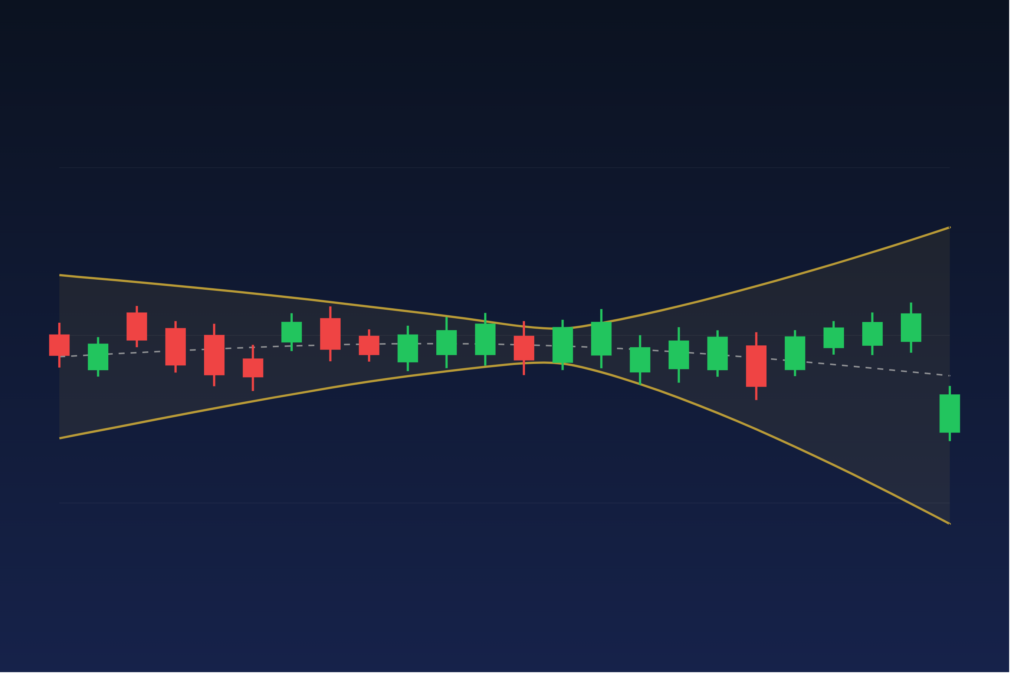
- Volatility indicators: Bollinger Bands, Average True Range (ATR)
- Volume indicators: On-Balance Volume (OBV), Money Flow Index
These tools have been refined over decades. Their formulas are publicly documented, their behavior is well-understood, and virtually every trading book references them. That reliability is a genuine advantage — you can find educational resources, forum discussions, and strategy guides for almost every built-in indicator without difficulty.
Where Built-In Indicators Fall Short
The limitation of standard indicators is that they are generalized. They were designed to work across many markets and timeframes, which means they are rarely optimized for any specific one. A standard RSI, for example, applies the same calculation logic whether you are trading a volatile cryptocurrency pair or a slow-moving major currency pair. It cannot adapt its logic to market structure, session timing, or instrument-specific behavior on its own.
Additionally, built-in indicators are reactive by nature. They process price data that has already occurred. While this is true of all indicators to some degree, standard tools offer limited flexibility in how that data is filtered, weighted, or presented. Traders who want to reduce noise, combine multiple signals into one visual, or apply proprietary logic must look elsewhere.
What Are Custom Indicators?
Custom indicators are tools coded independently — usually in MQL4 or MQL5 for MetaTrader platforms — that extend or replace the logic of standard indicators. They can be built by individual traders, professional developers, or third-party vendors, and they range from simple modifications of existing formulas to entirely original analytical frameworks.
Here are some common examples of what custom indicators can do that built-in ones cannot:
- Combine multiple signals: A custom indicator might merge trend direction, momentum, and volatility into a single dashboard or color-coded signal on one chart.
- Apply advanced filtering: Noise reduction techniques, adaptive smoothing periods, or volatility-adjusted thresholds can be hard-coded into the indicator’s logic.
- Display non-standard data: Custom tools can visualize things like session ranges, order block zones, or market structure highs and lows automatically — calculations that would take considerable manual effort otherwise.
- Send alerts: Many custom indicators include push notifications, email alerts, or pop-up messages triggered by specific conditions, removing the need to watch the chart continuously.
The Trade-Off: Complexity and Trust
Custom indicators come with an important caveat: you cannot always verify what is happening under the hood unless you read the source code or trust the developer. A well-built custom indicator from a reputable source is a powerful asset. A poorly coded one might repaint signals (showing different historical values each time the chart refreshes), use future data inadvertently, or simply perform no better than a free built-in alternative.
Before relying on any custom indicator in live trading, it is worth testing it rigorously on a demo account, checking whether signals repaint, and understanding conceptually what it is measuring. If the developer cannot explain the logic in plain language, that is a red flag worth noting.
Which Type Is Right for Your Strategy?
The answer depends on what stage you are at and what problem you are trying to solve.
Built-in indicators are ideal when: you are learning technical analysis fundamentals, backtesting simple rule-based strategies, or collaborating with other traders using a shared vocabulary. Their consistency and transparency make them excellent teaching and testing tools.
Custom indicators become valuable when: you have a clear, specific analytical need that standard tools do not address efficiently. Perhaps you want to track a proprietary price pattern, automate a multi-condition signal, or reduce screen time by consolidating several indicators into one clean visual.
Many experienced traders use both. A core strategy built on well-understood standard tools is often enhanced — not replaced — by custom indicators that handle specific filtering or alerting tasks.
Putting It Into Practice
The most practical approach is to start with the built-in library to understand what you are measuring and why, then explore custom solutions once you identify genuine gaps. When evaluating custom indicators, prioritize transparency, verified backtesting results, and developer credibility.
For traders who use MetaTrader and want professionally developed custom indicators and Expert Advisors that are clearly documented and built with sound trading logic, MGH Products at mghfx.com offers a range of tools worth exploring as part of that process.
Ultimately, no indicator — built-in or custom — replaces a solid understanding of price behavior and risk management. The best tools amplify good analysis; they do not substitute for it.
Disclaimer: This article is intended for educational purposes only and does not constitute financial or trading advice. Trading forex and CFDs carries significant risk. Always conduct your own research and consult a qualified financial professional before making trading decisions.
Photo by Austin Hervias on Unsplash